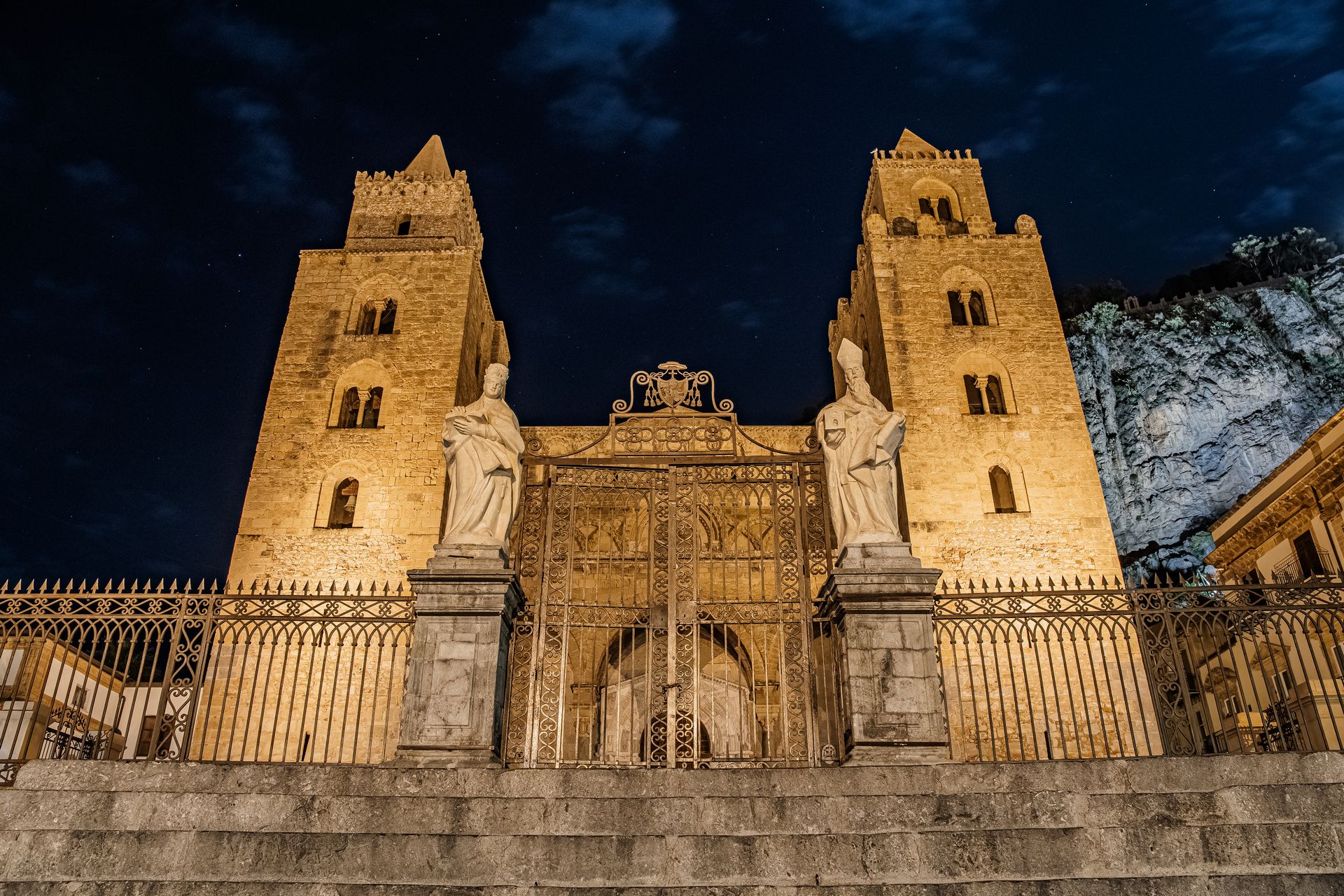
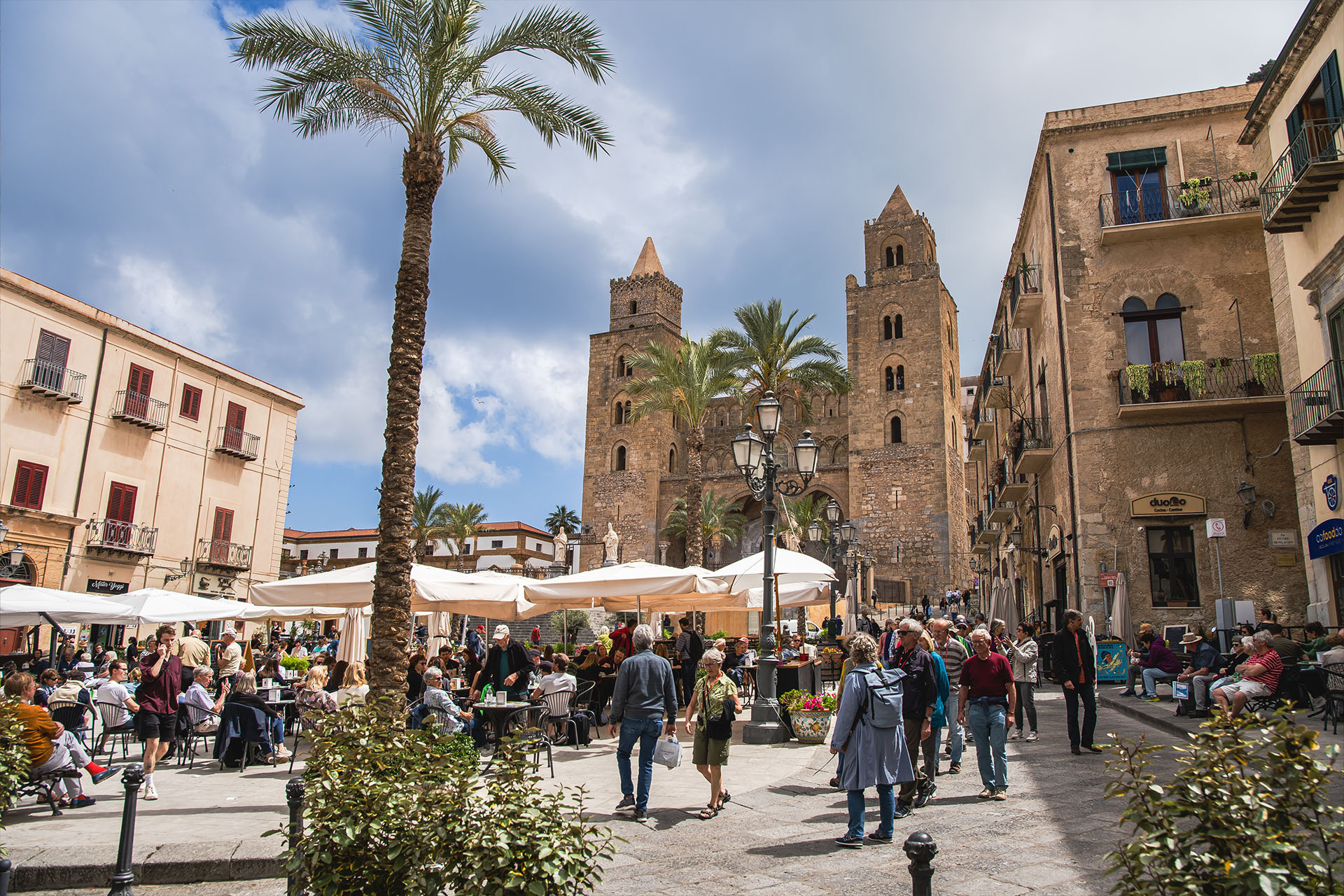
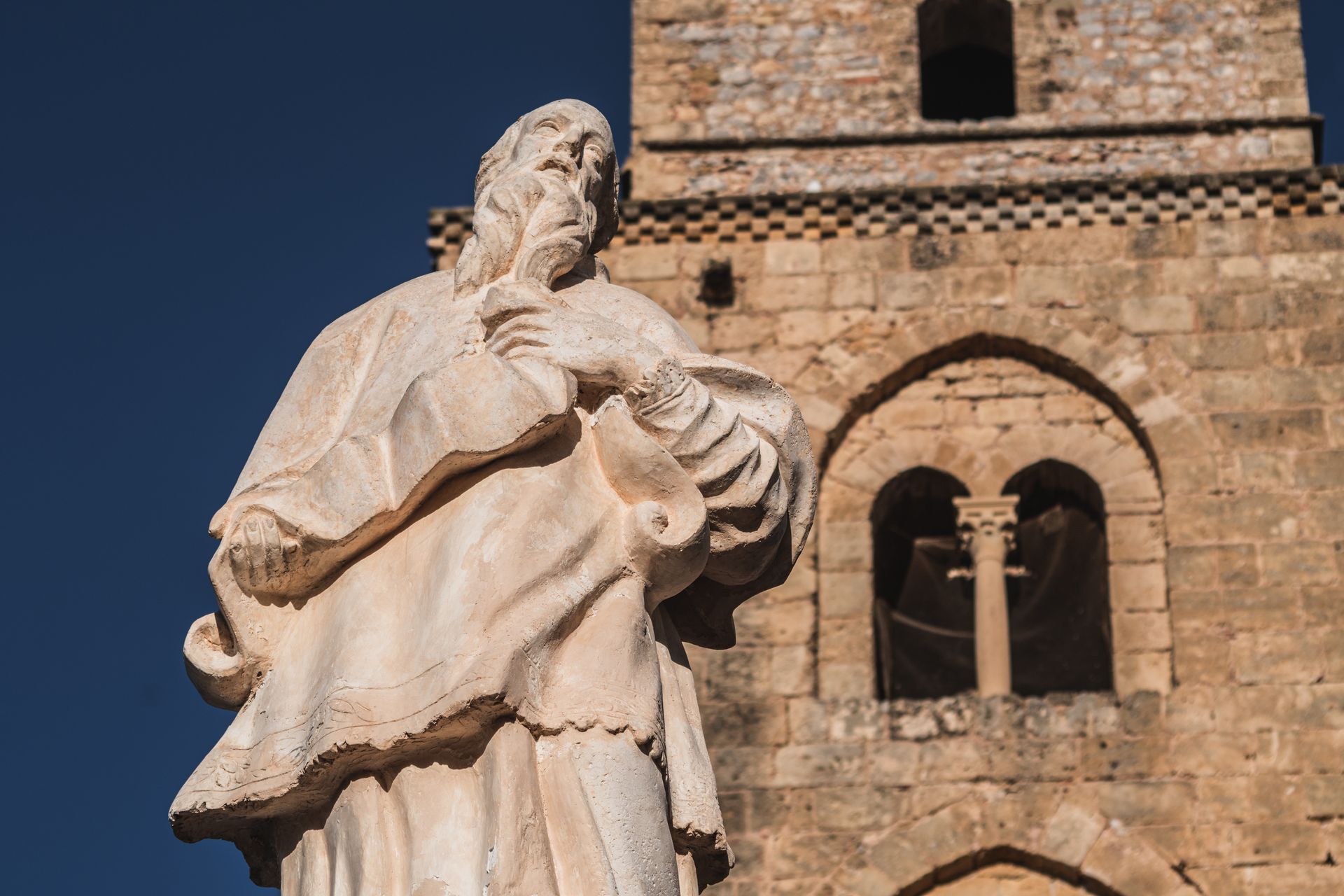
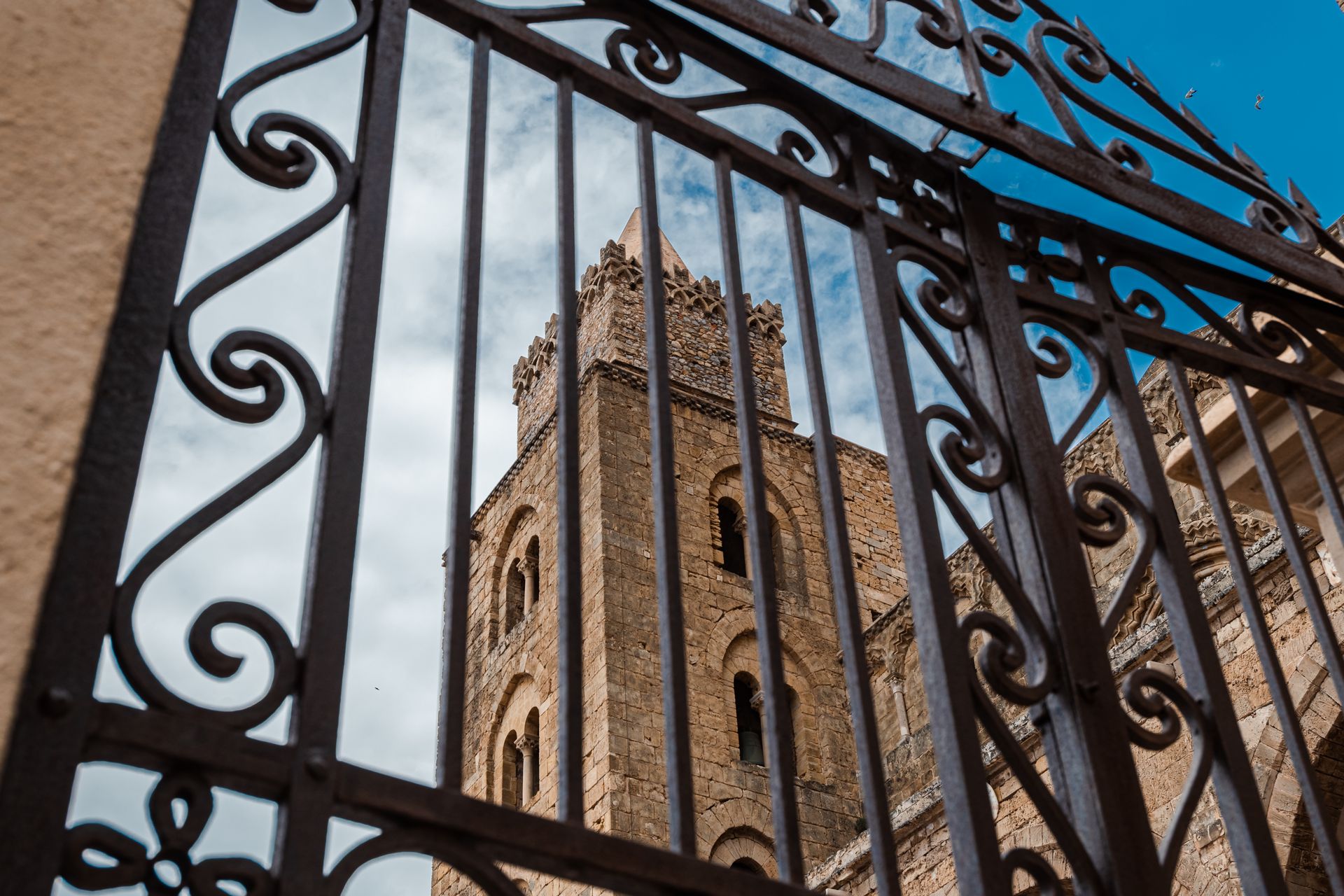
Among the things to see in Cefalù, a visit to the imposing Norman Duomo is a must. It stands in the square of the same name, in the heart of the historic centre at the foot of the Rocca. Cefalù Cathedral is a hymn to beauty that has withstood time, wars and modernity, preserving traces of the Arab-Norman influence on the island.
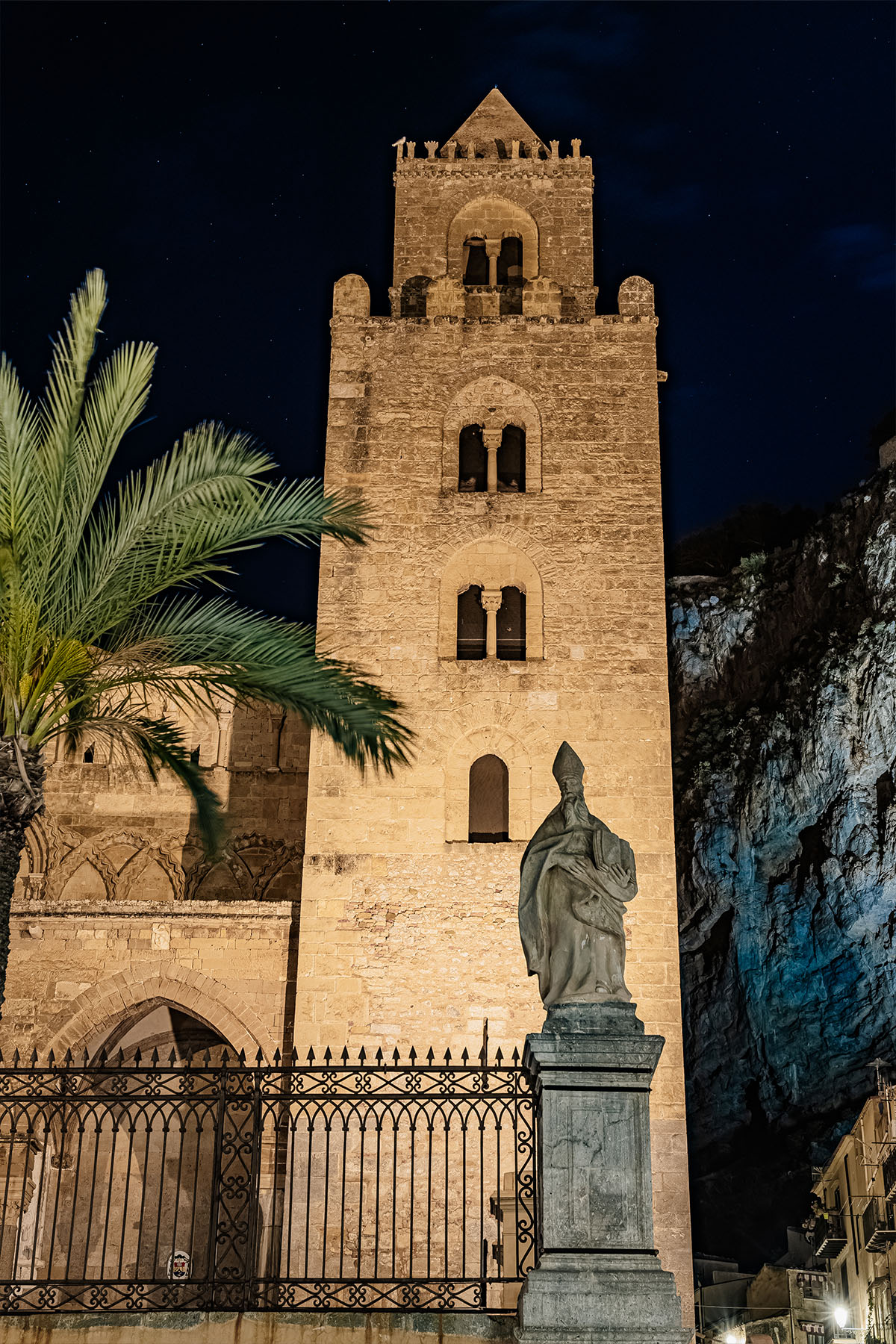
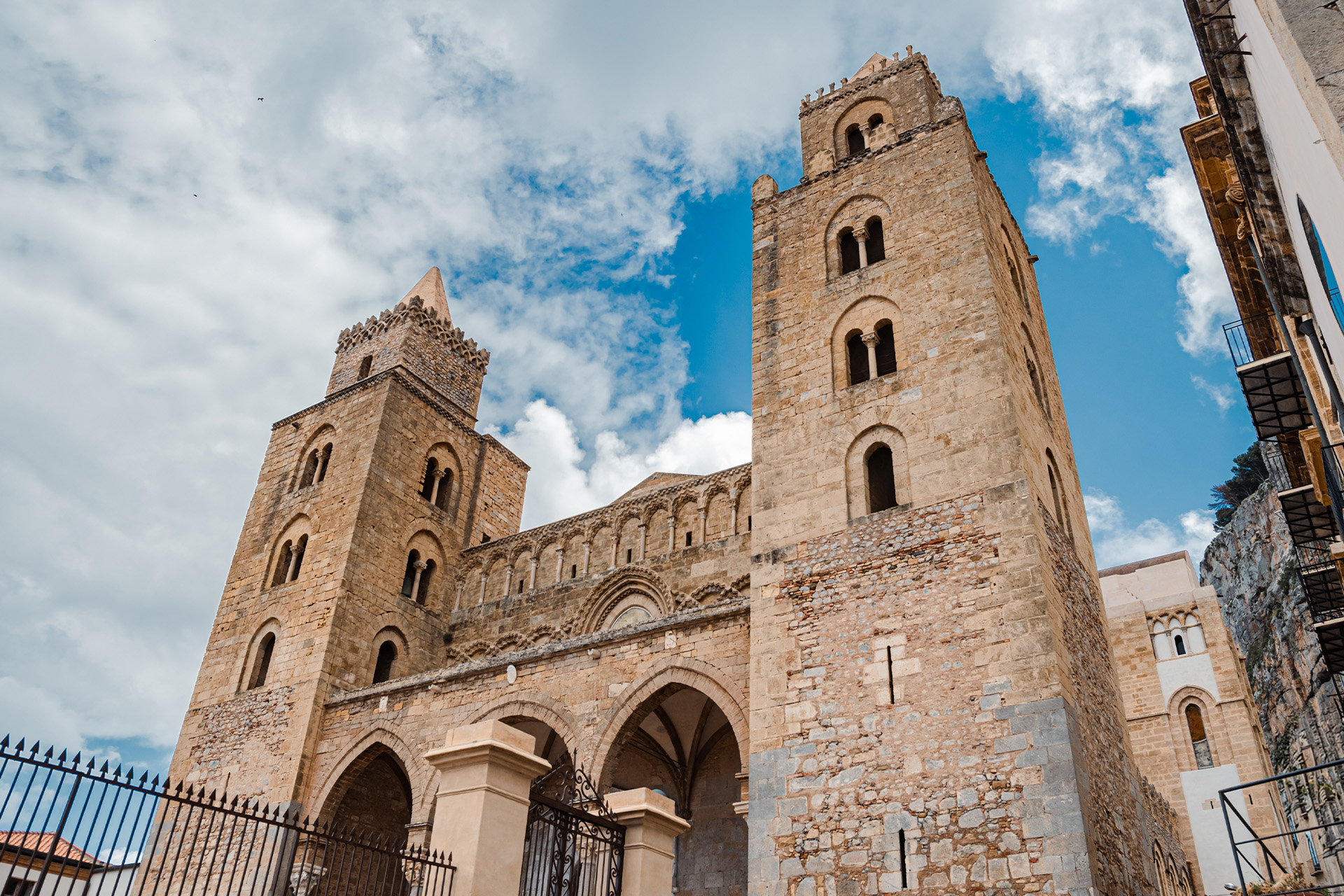
Framed by two mighty towers, the cathedral was commissioned by Roger II, the first King of Sicily, in 1131 and consecrated almost a century and a half later (1267). Inside, the precious Byzantine mosaics created by the masters of Constantinople in 1145 survive unchanged in all their splendour.
A symbol of the town and an unmissable stop for anyone visiting Cefalù, the Basilica of the Transfiguration – better known as the Duomo or Cefalù Cathedral – is a hymn to beauty that has withstood time, wars and modernity, preserving traces of the Arab-Norman influence on the island.
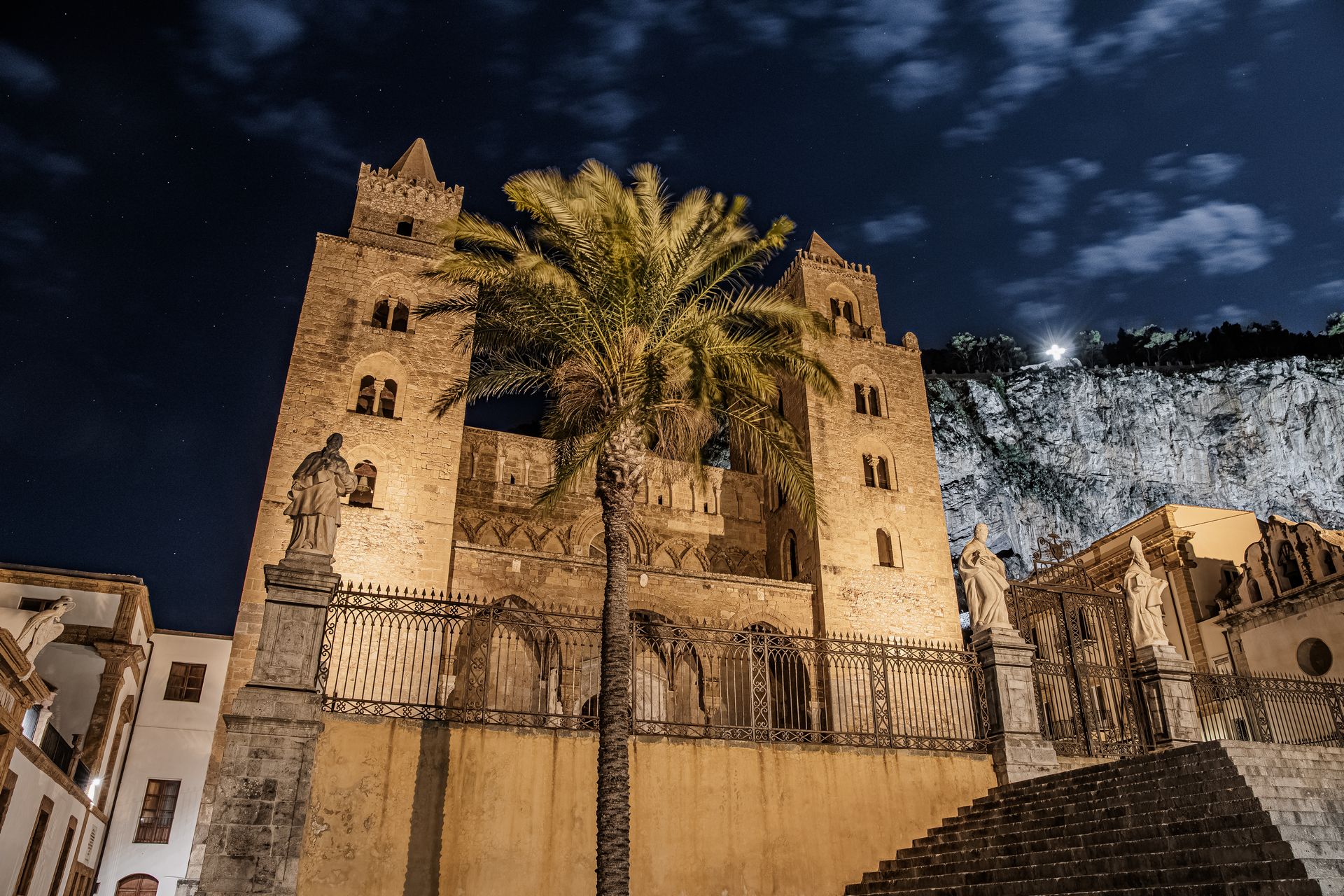
A UNESCO World Heritage Site since 2015, it stands in the heart of the historic centre, in the square of the same name, rising in all its grandeur against the Rocca di Cefalù that looms behind it. Framed by two mighty towers, the cathedral was commissioned by Roger II, the first King of Sicily, in 1131 and consecrated almost a century and a half later (1267).
Cefalù Cathedral: a hymn to Arab-Norman beauty
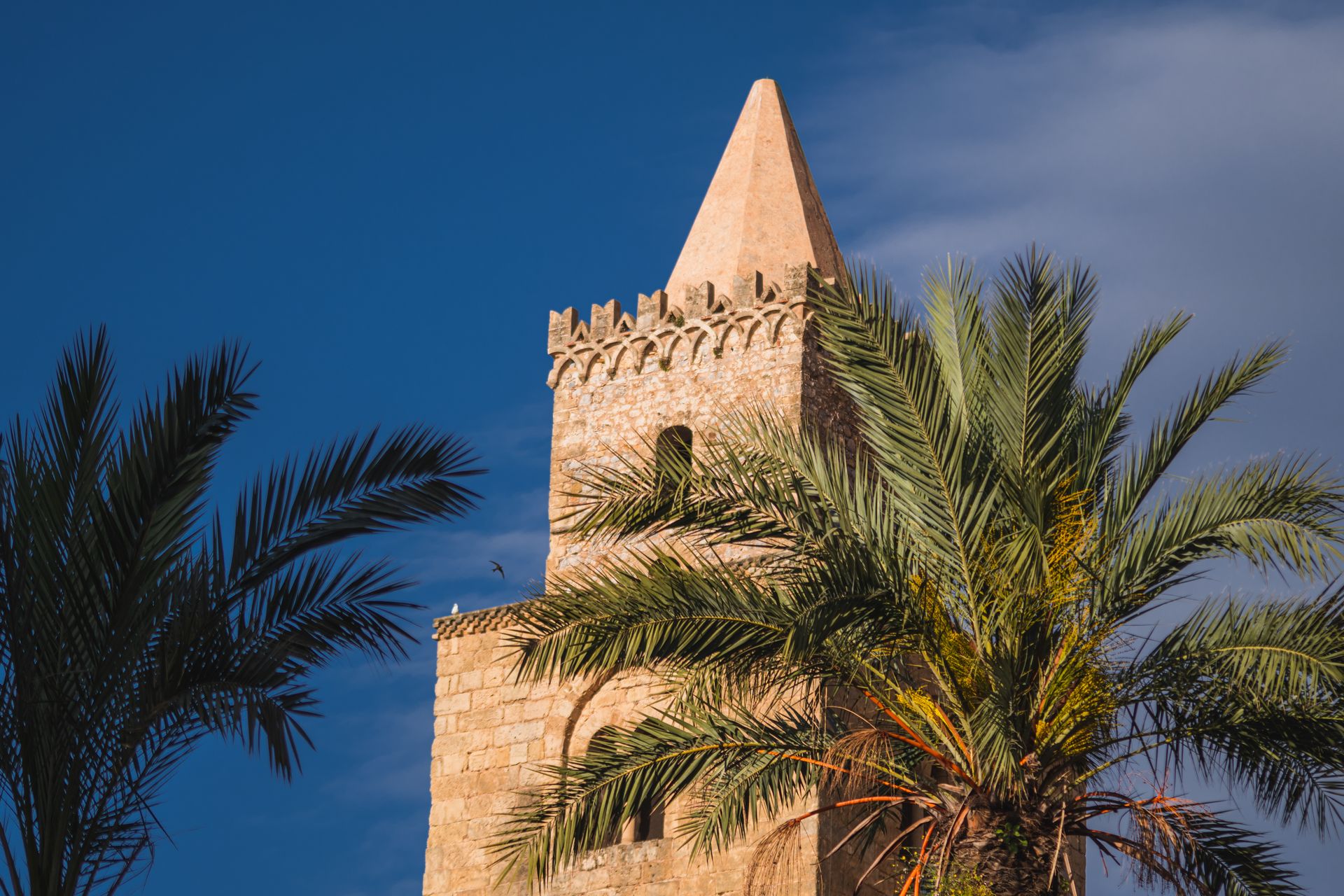
The Norman Romanesque style that characterises it, making it the finest testimony of that era, can be seen not only on the outside, in its two mighty Arab-style side towers, but above all on the inside.
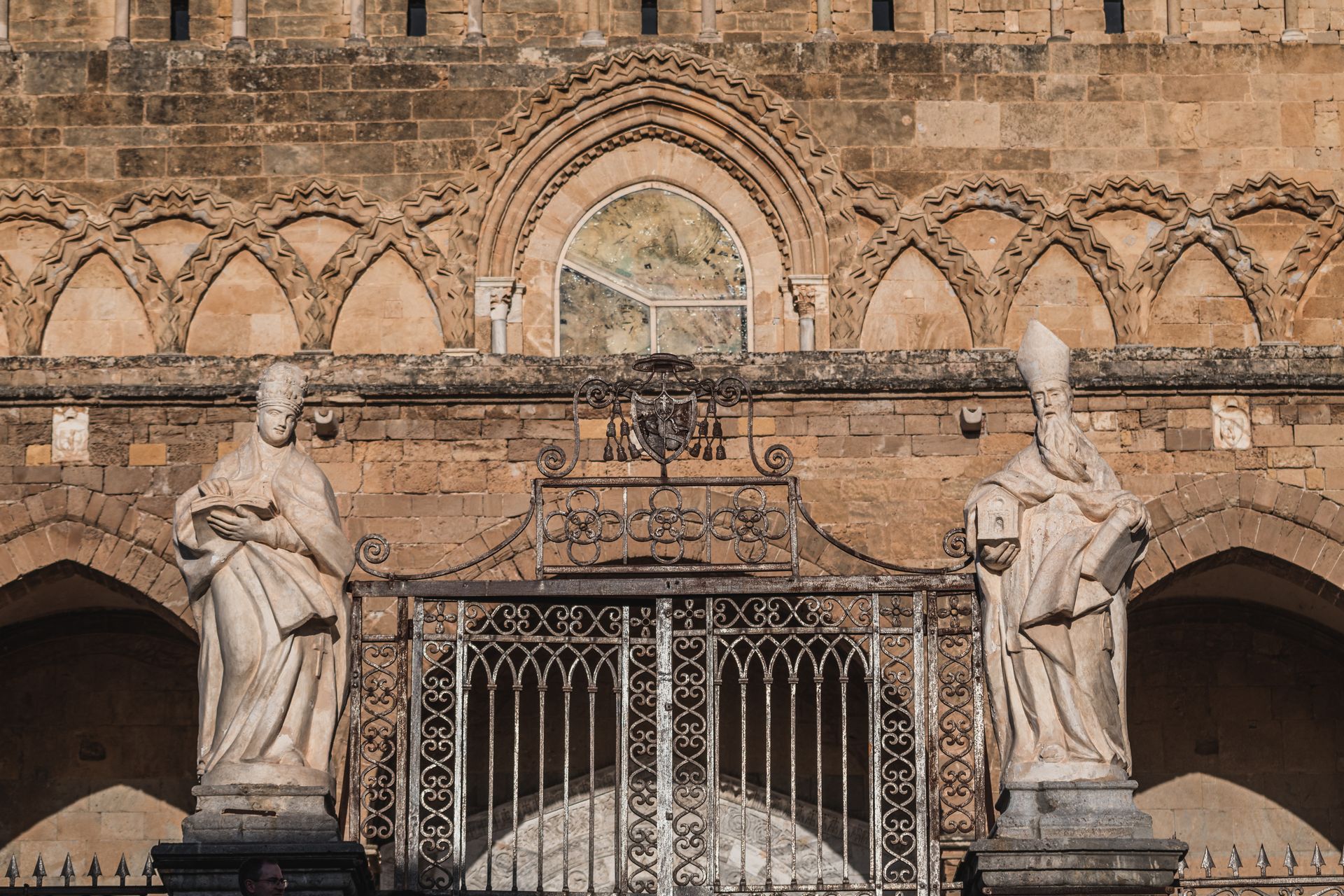
Beyond the short flight of steps separating the square from the Duomo of Cefalù and the spectacular terraced churchyard, a fifteenth-century portico of three arches with cross vaults leads to the façade, preceded by the Porta Regum and a finely decorated marble portal.
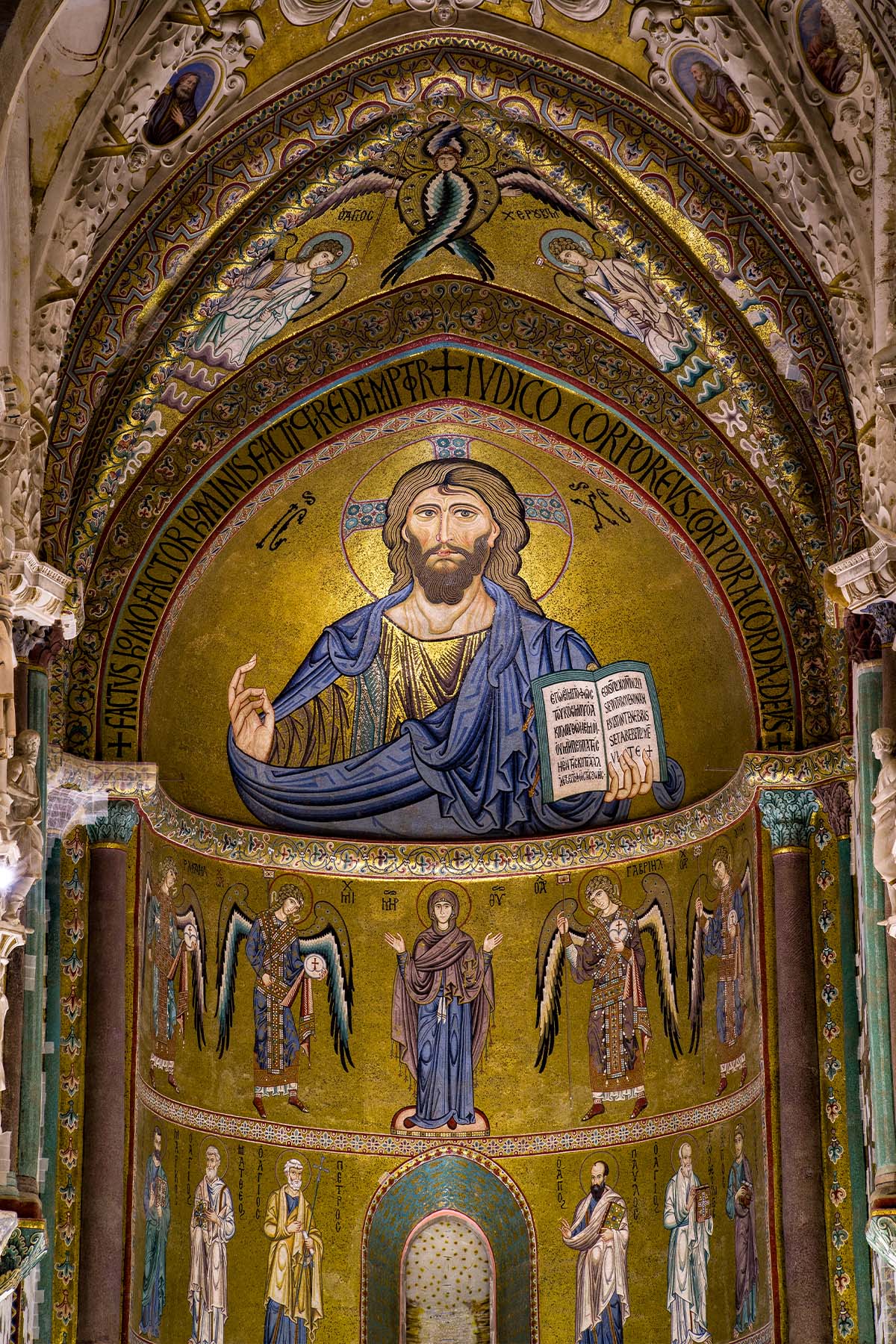
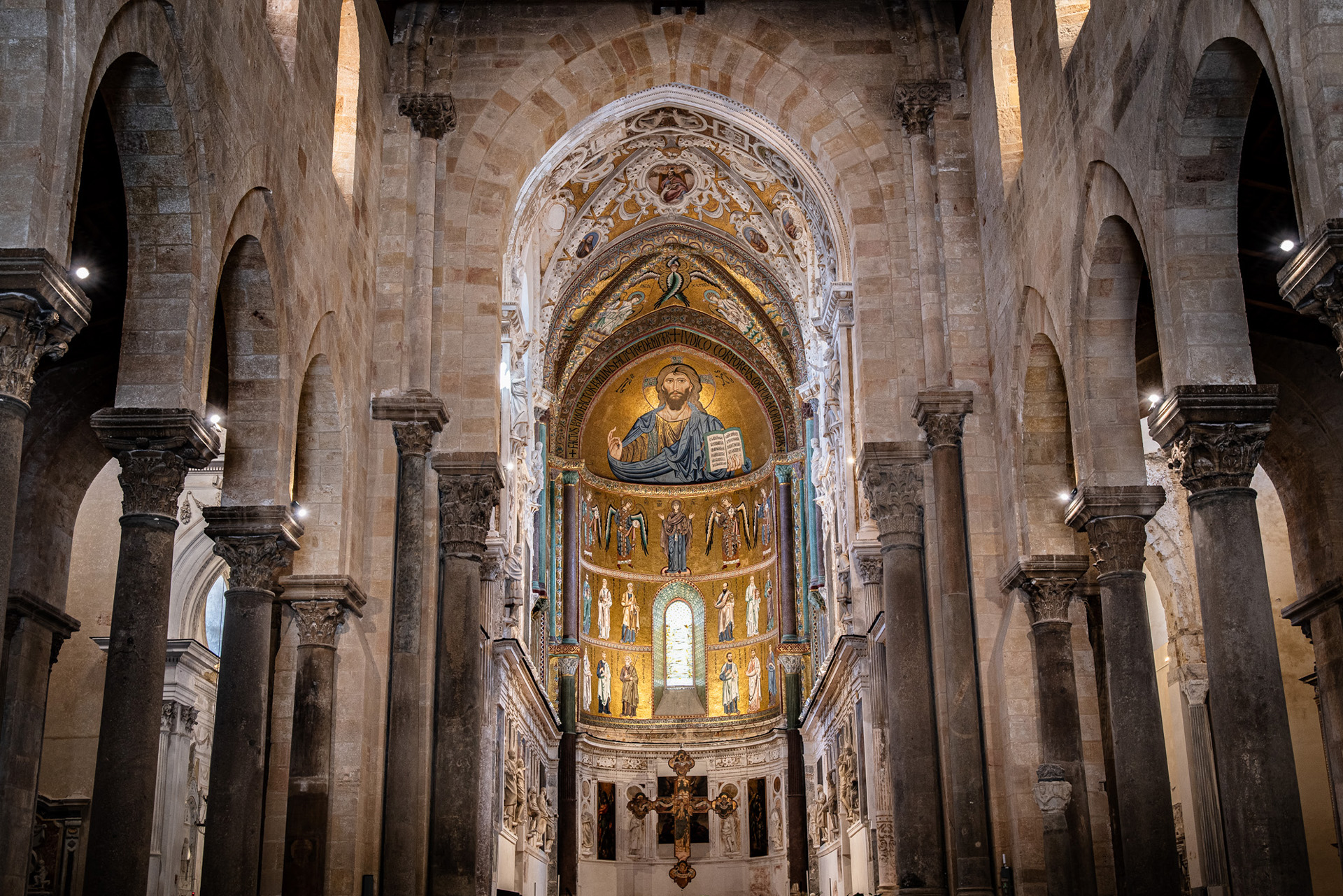
The interior of Cefalù Cathedral is laid out in the shape of a Latin cross, divided into three naves supported by imposing, solemn granite columns. It is the central apse, however, where art, history and wonder blend, establishing the Duomo as one of the most incredible examples of Middle Eastern-influenced religious architecture in Sicily.
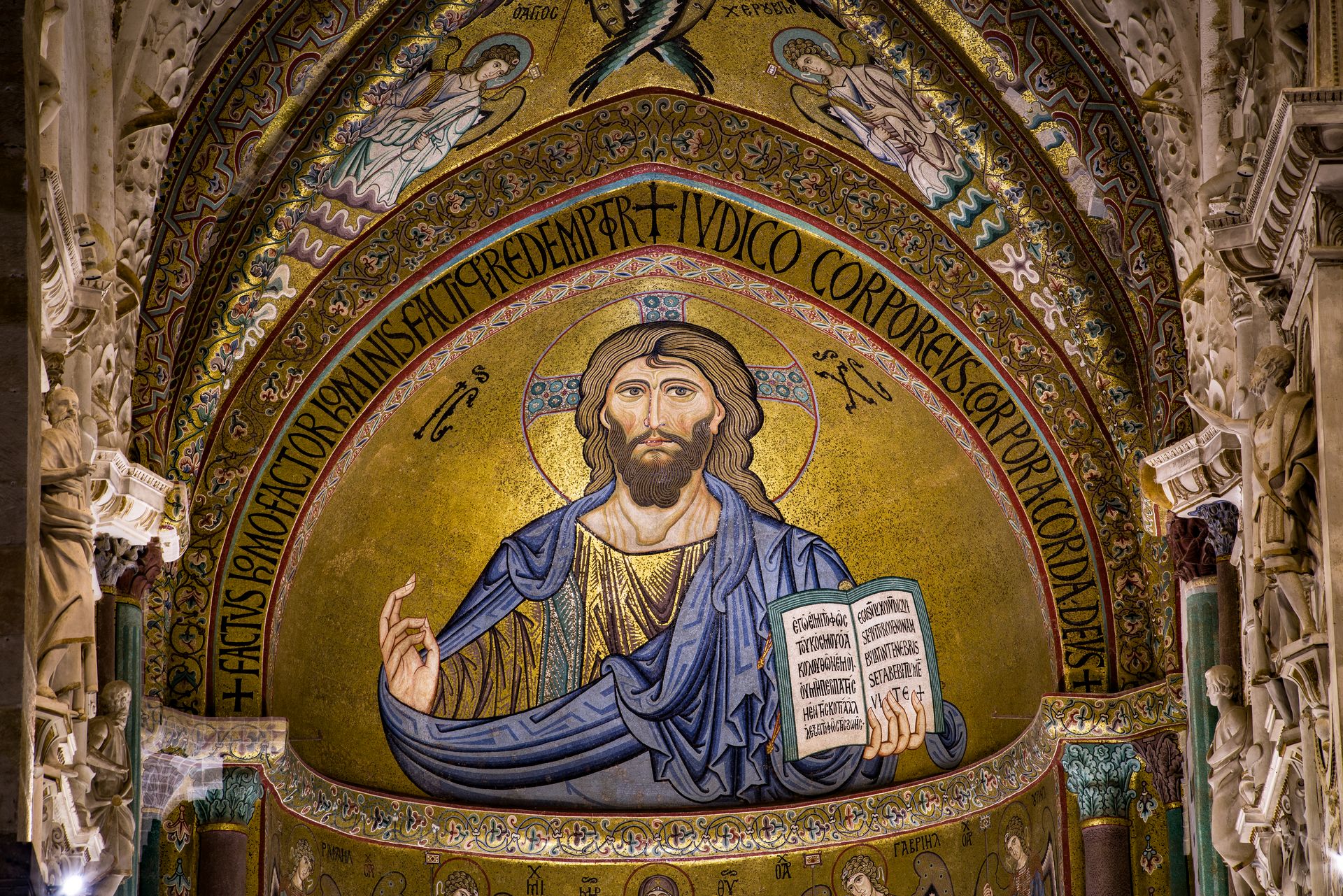
The apse is covered in precious Byzantine mosaics extending over about 600 m², made by masters from Constantinople and completed between 1148 and 1166. Christ Pantocrator is the dominant figure, standing solemnly in the apse vault, followed by the Madonna in prayer flanked by the four archangels.
All around, a riot of saints, apostles, religious symbols and stylised plant motifs fills the central apse, the presbytery and the choir vault of Cefalù Cathedral, leaving anyone who steps inside open-mouthed.
It is hard to look away from this splendour, but turn to the left and you will see the rectangular cloister dating from the 12th century, brought back to light only recently after careful restoration.
Only a small part of the original structure survives, where a cycle of richly decorated capitals topped by paired columns from the medieval period can be seen.