Famous worldwide for its majestic Arab-Norman Cathedral, for Antonello da Messina’s celebrated Portrait of an Unknown Man kept at the Museo Mandralisca, for its mighty Rocca and for its golden beaches with crystal-clear water, Cefalù is much more. It is a treasure chest of history, culture and nature, to be discovered in every season, with a special charm in autumn and spring, when the climate is mild and the village, far from the summer crowds, shows itself in all its beauty.
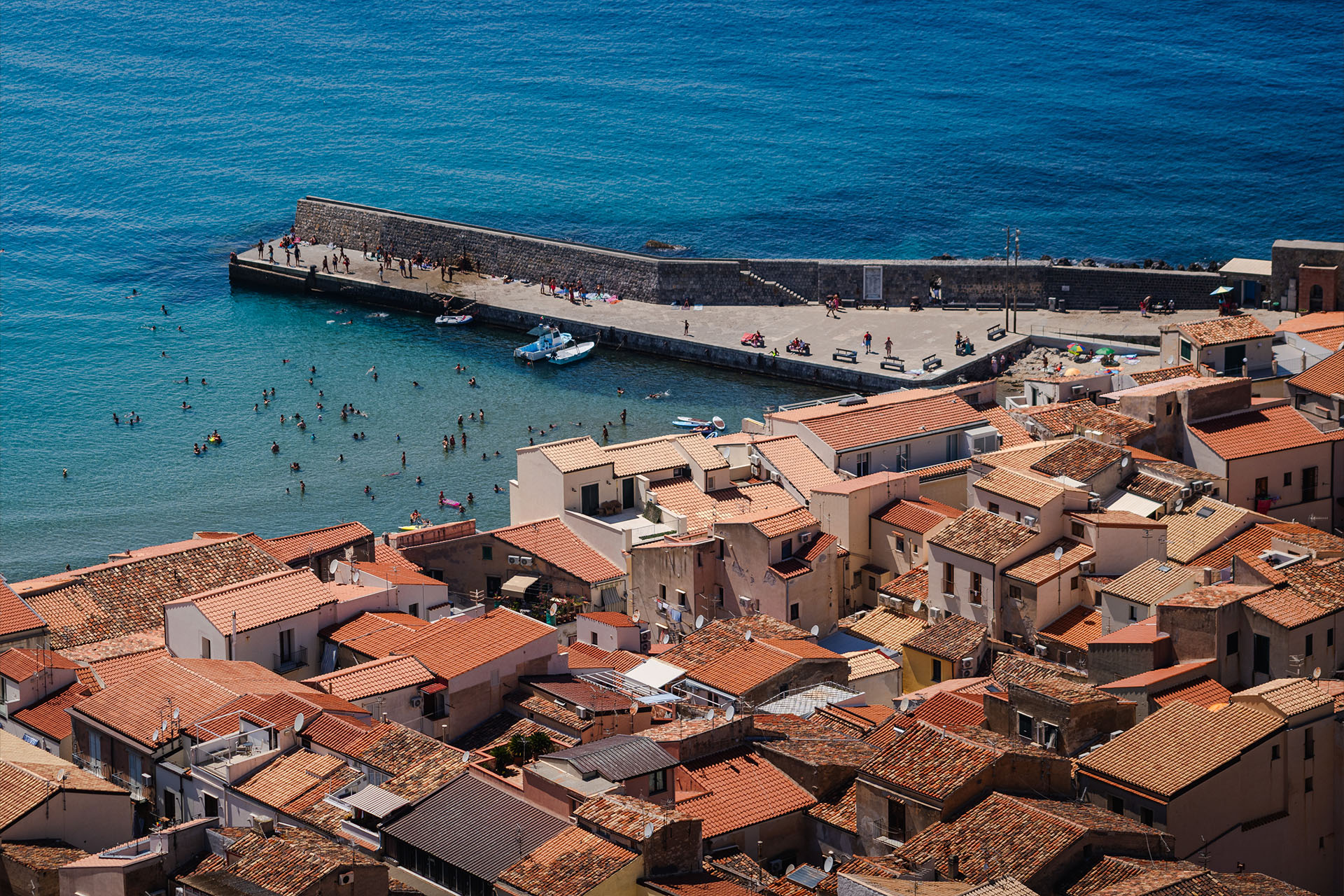
The town is part of the Madonie Park and belongs to the club of I Borghi più belli d’Italia (Italy’s Most Beautiful Villages). It lies at the foot of a rocky promontory, about 60 km from Palermo, and grew up around the Duomo commissioned by the Norman king Roger II. Seemingly small, it holds an endless wealth of artistic, historical and natural treasures, to be admired slowly, walking its narrow lanes and taking in the houses and walls clinging to the rock. Here you can breathe the past and the slow rhythm of a seafaring village, kissed by the sea that still makes it one of Sicily’s most fascinating pearls.
Here is a seven-day itinerary to explore Cefalù and its surroundings.
Cefalù’s origins date back to the 6th-5th century BC, when Greek colonists from Himera fortified it as a centre for controlling the territory. Contested by the Carthaginians, ruled by the Romans and the Byzantines, conquered by the Arabs and finally by the Normans, it preserves traces of all these cultures in its historic centre. A simple walk through the lanes makes this clear.
Roman Road
On Corso Ruggero you will find a 6-metre stretch of paving dating from the Hellenistic-Roman town (1st century BC), which can be visited inside the Corte delle Stelle complex, considered one of the most representative buildings of the 20th century.
Osterio Magno
A few steps from the Roman Road, this 12th-century fortified palace belonged to the noble Ventimiglia family and is probably a portion of King Roger II’s Domus Regia. It houses archaeological finds from the 2nd-1st century BC.
Opening hours: 09:00-14:00 / 15:00-20:00
Votive shrines
Strolling through the lanes, you will come across the characteristic votive shrines, an expression of popular devotion, especially well tended during the Festa del SS. Salvatore. Those on Via Botta and Via Spinuzza are particularly notable.
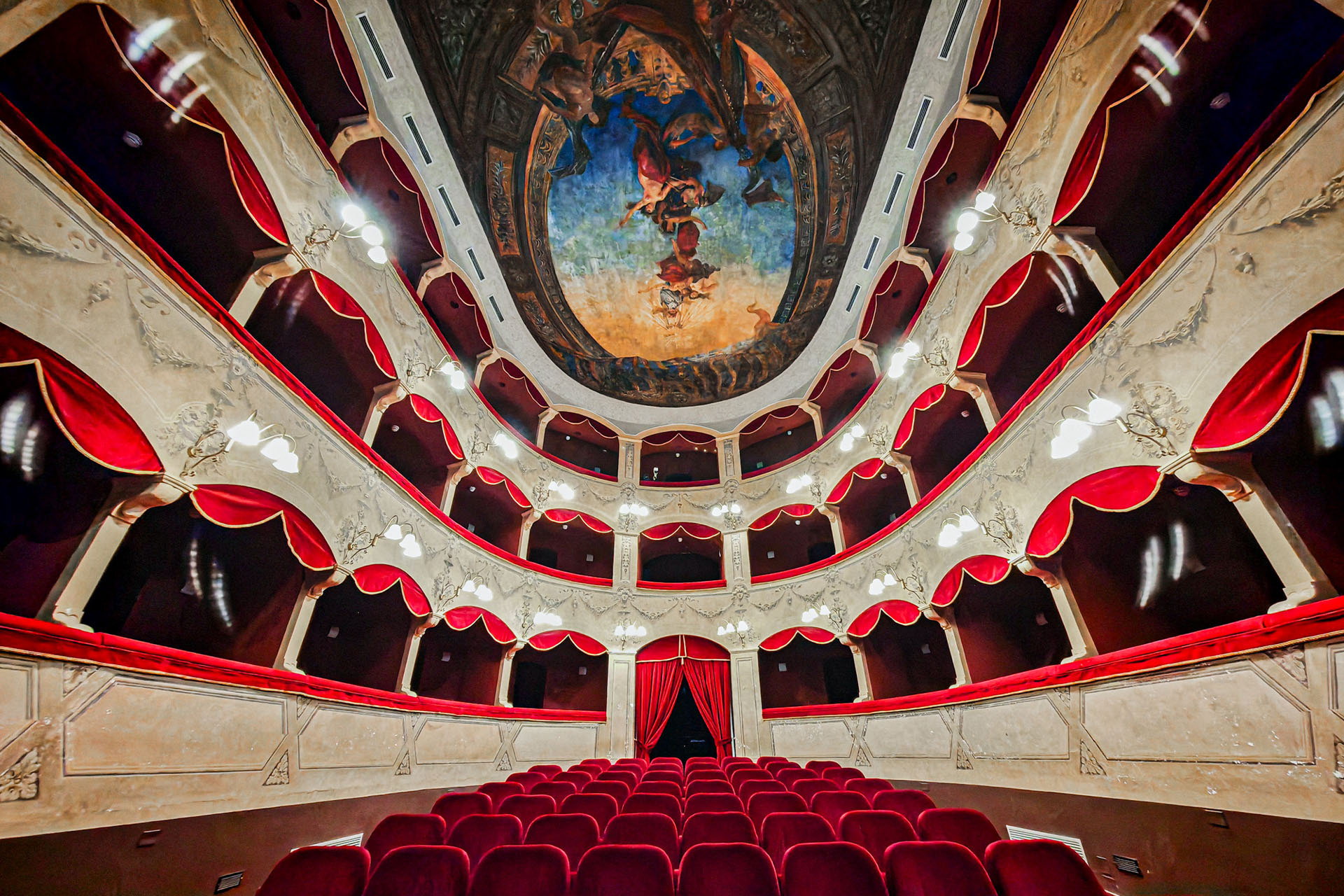
Teatro Comunale
Named after the Cefalù-born musician Salvatore Cicero, it is a small gem of Italian-style architecture from 1818, decorated in a style that anticipated Art Nouveau by Rosario Spagnolo. Set of the film Nuovo Cinema Paradiso (1988).
Opening hours: Tuesday-Sunday 09:00-14:00 / 15:30-20:30
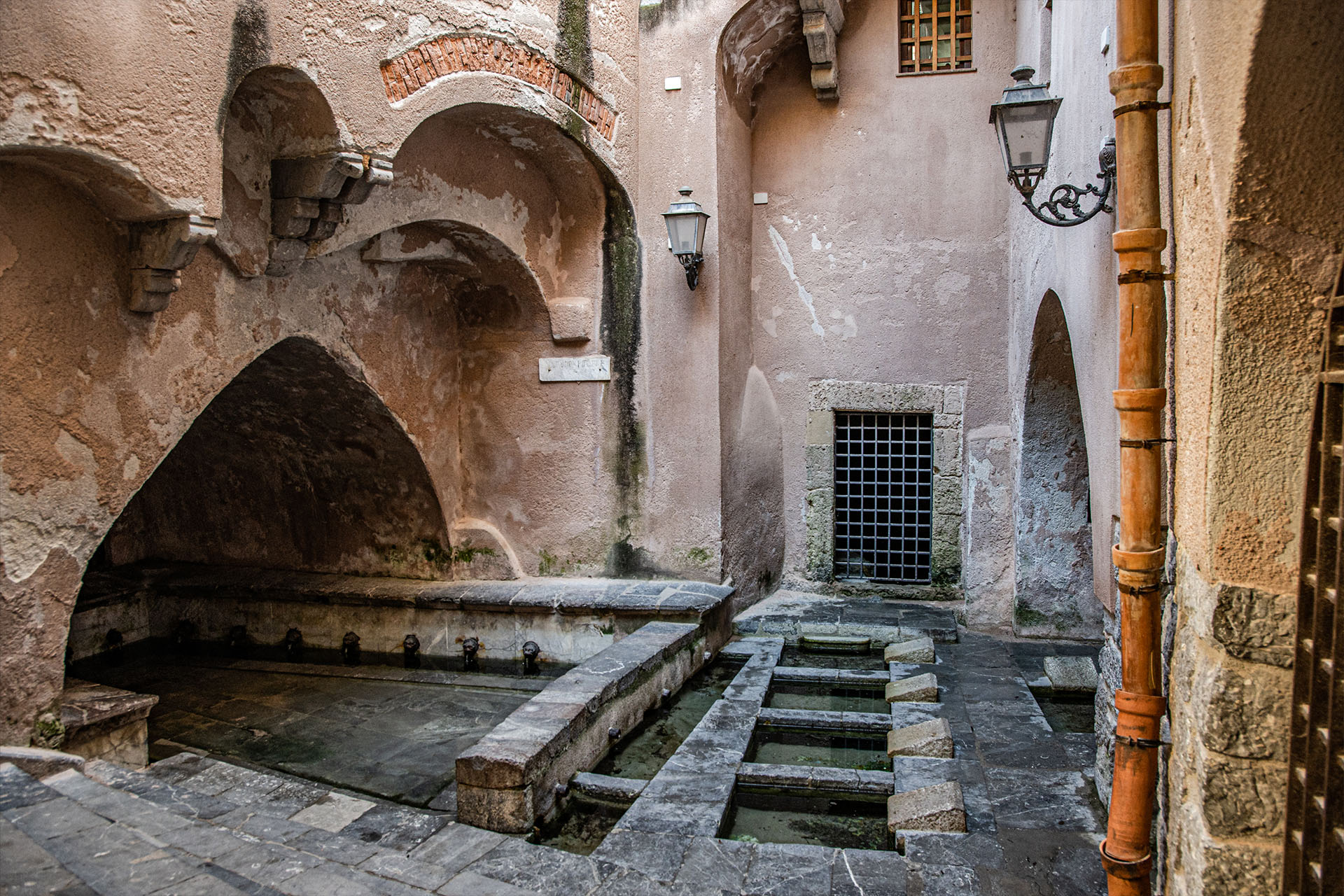
Lavatoio Medievale
Probably of Arab-Norman origin and restored in the 16th century, it has 22 cast-iron spouts from which the waters of the Cefalino river flow. The waters are exceptionally pure and, according to legend, were born from the tears of a nymph.
Opening hours: 08:00-24:00
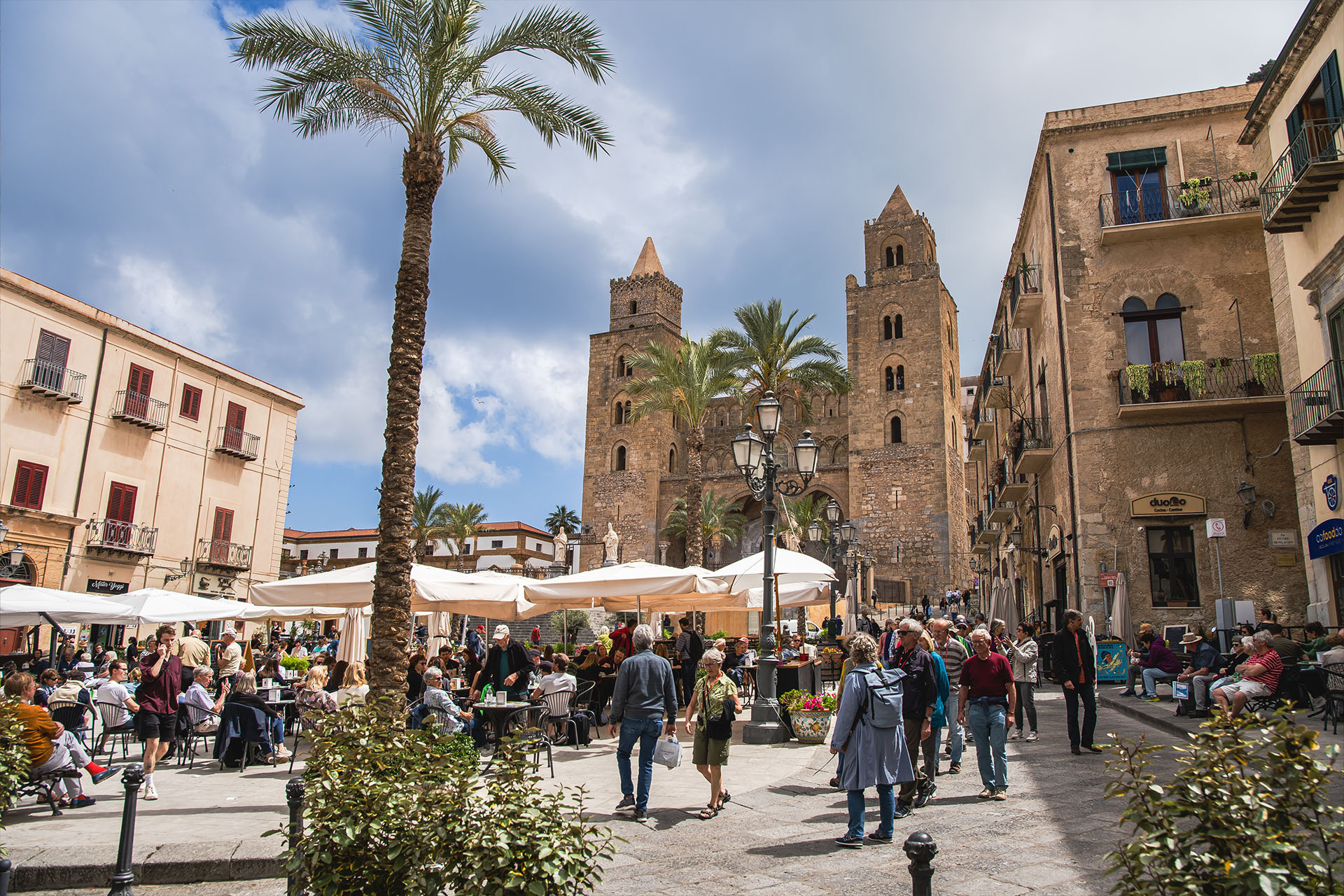
Cefalù Cathedral
Founded in 1131 by Roger II, the Cathedral Basilica dedicated to the Transfiguration is famous for its towers and Byzantine mosaics, in particular the Christ Pantocrator. Don’t miss the Chapter Cloister, the oldest in Sicily. A UNESCO World Heritage Site since 2015.
Opening hours: 08:00-12:45 / 15:30-17:45 (weekends until 19:30)
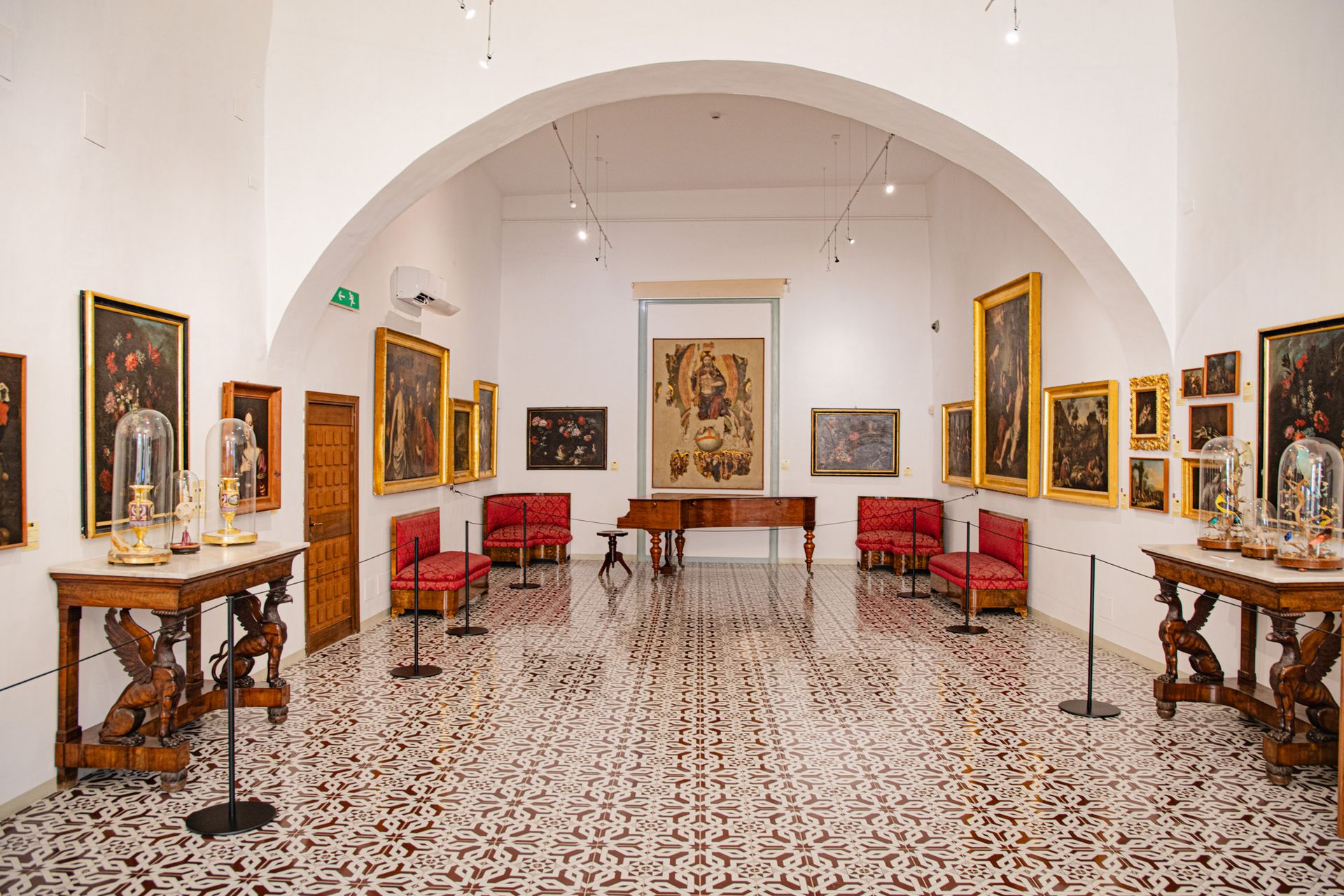
Museo Mandralisca
Housed in the palace of the patron Enrico Pirajno di Mandralisca, it preserves archaeological, numismatic, malacological and art collections. Its masterpiece is Antonello da Messina’s Portrait of an Unknown Man.
Opening hours: 09:00-19:00 (August 09:00-23:00)
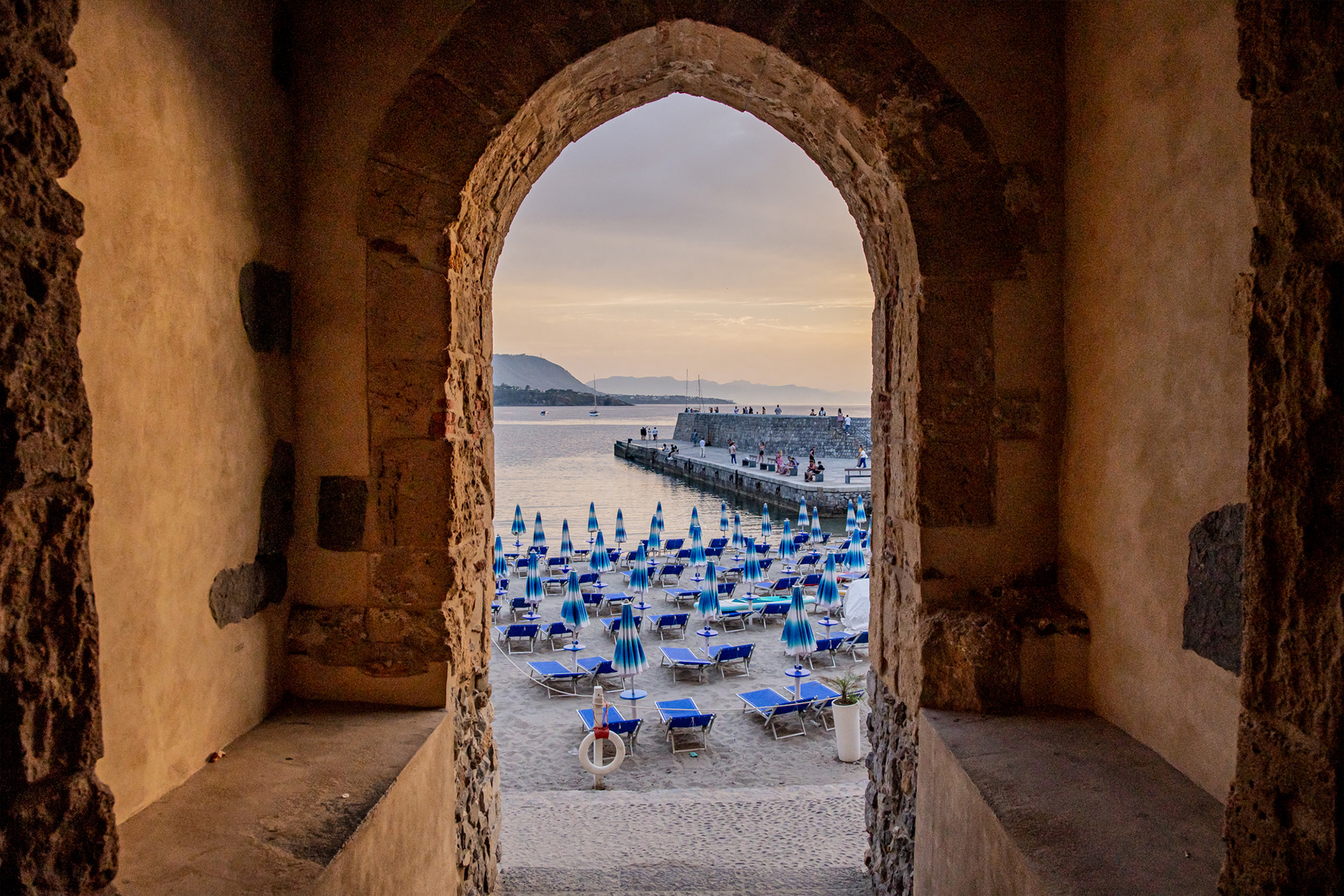
Porta Pescara, Piazza Marina and the Old Pier
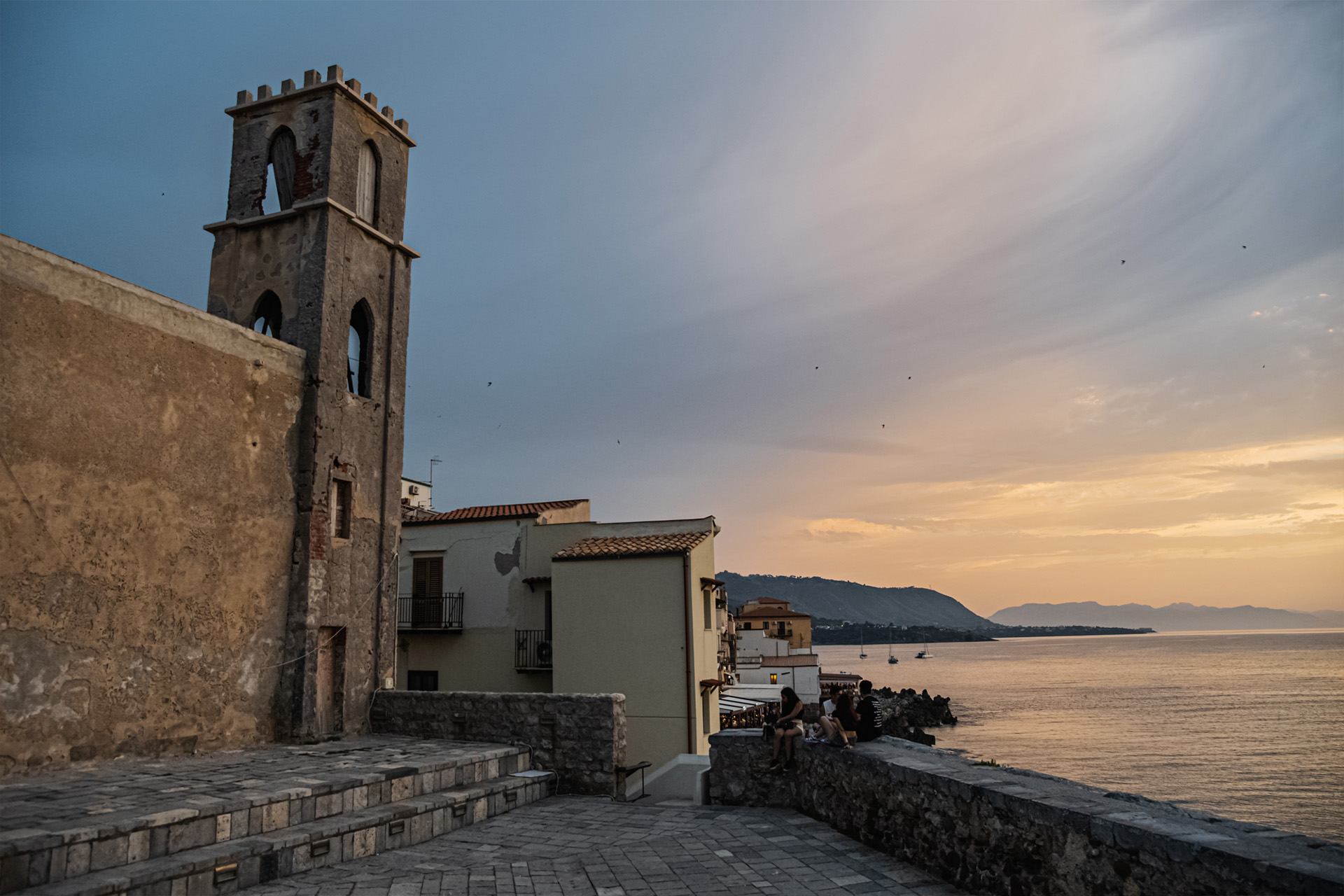
Porta Pescara is the only one of the four medieval gates still standing. From here the seafront stretches out with the pier, the fishermen’s houses and the pointed arches for the boats, a set of Nuovo Cinema Paradiso.
The Rocky Path and the Jewish Quarter
From the steps of the pier you reach Porta Giudecca, the ancient entrance to the Jewish quarter, along a path between the cliffs and the megalithic walls.
Megalithic Walls and the Postierla
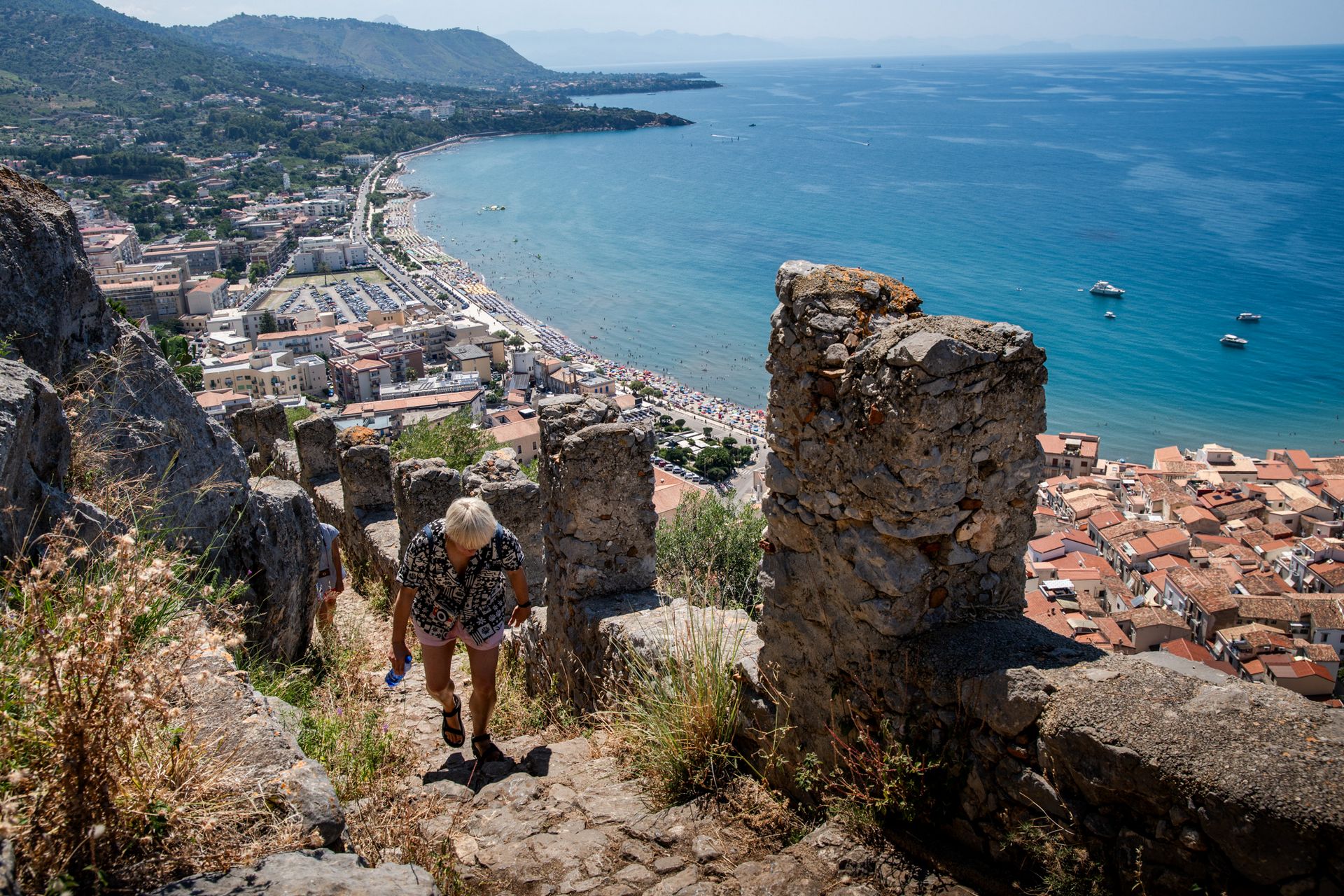
Probably built in the 5th century BC, they stand out for their huge stone blocks and for the different “seams” left by rebuilding work up to the 16th century.
Bastione di Capo Marchiafava and the Digital Museum
A 17th-century bulwark with a spectacular view. Inside, a digital museum offers an immersive augmented-reality experience among the UNESCO sites.
Opening hours: 11:30-16:00 / 18:00-24:00
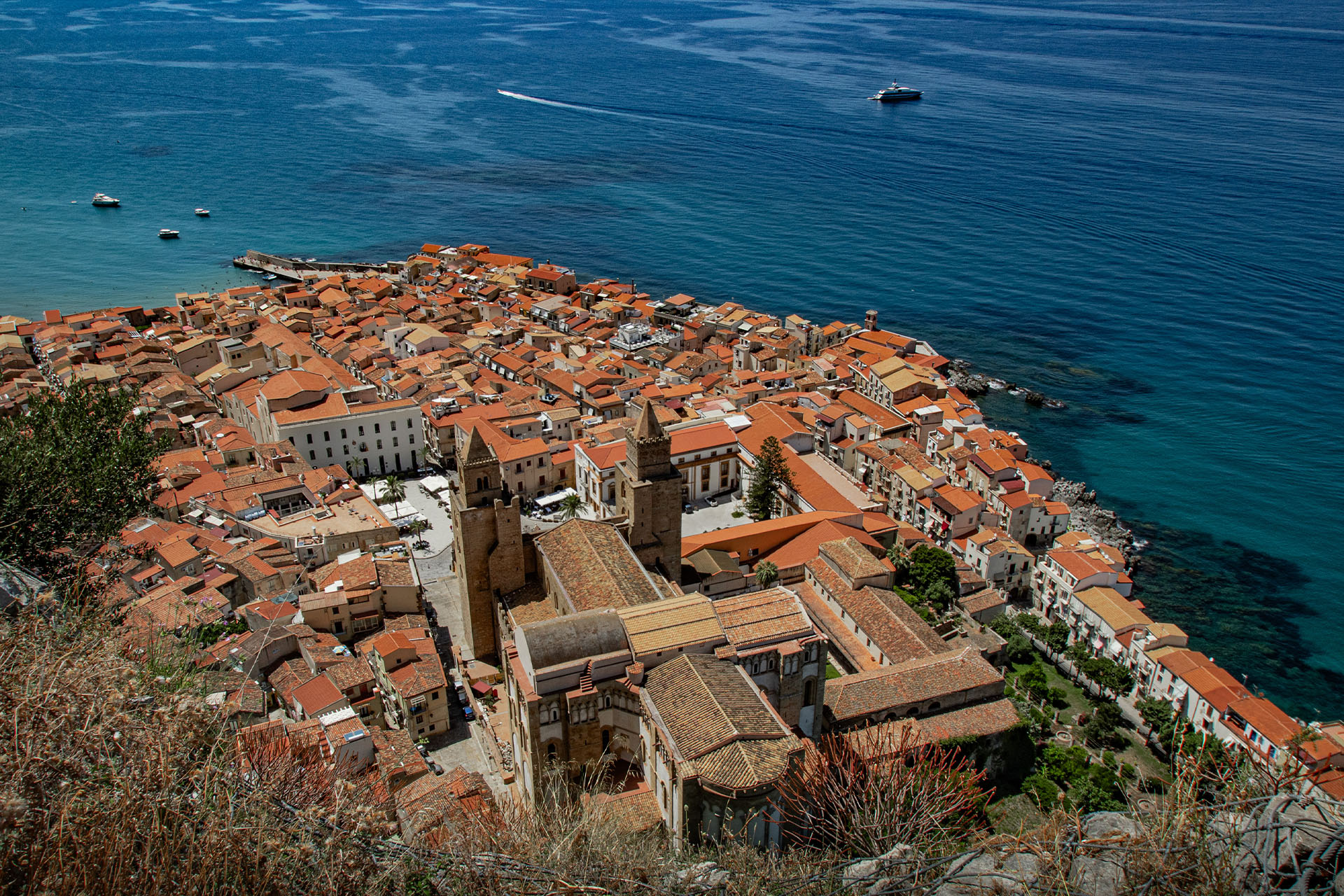
The Rocca towers over the village at 268 metres. From the climb up to Piazza Garibaldi, a full view opens out over Cefalù, the sea and the fortified walls. Not to be missed: the Temple of Diana, the early medieval settlement, the crenellated walls and the ruins of the Norman castle.
Opening hours: 08:00-19:00 (last entry 17:30, October-April)
Sanctuary of Gibilmanna
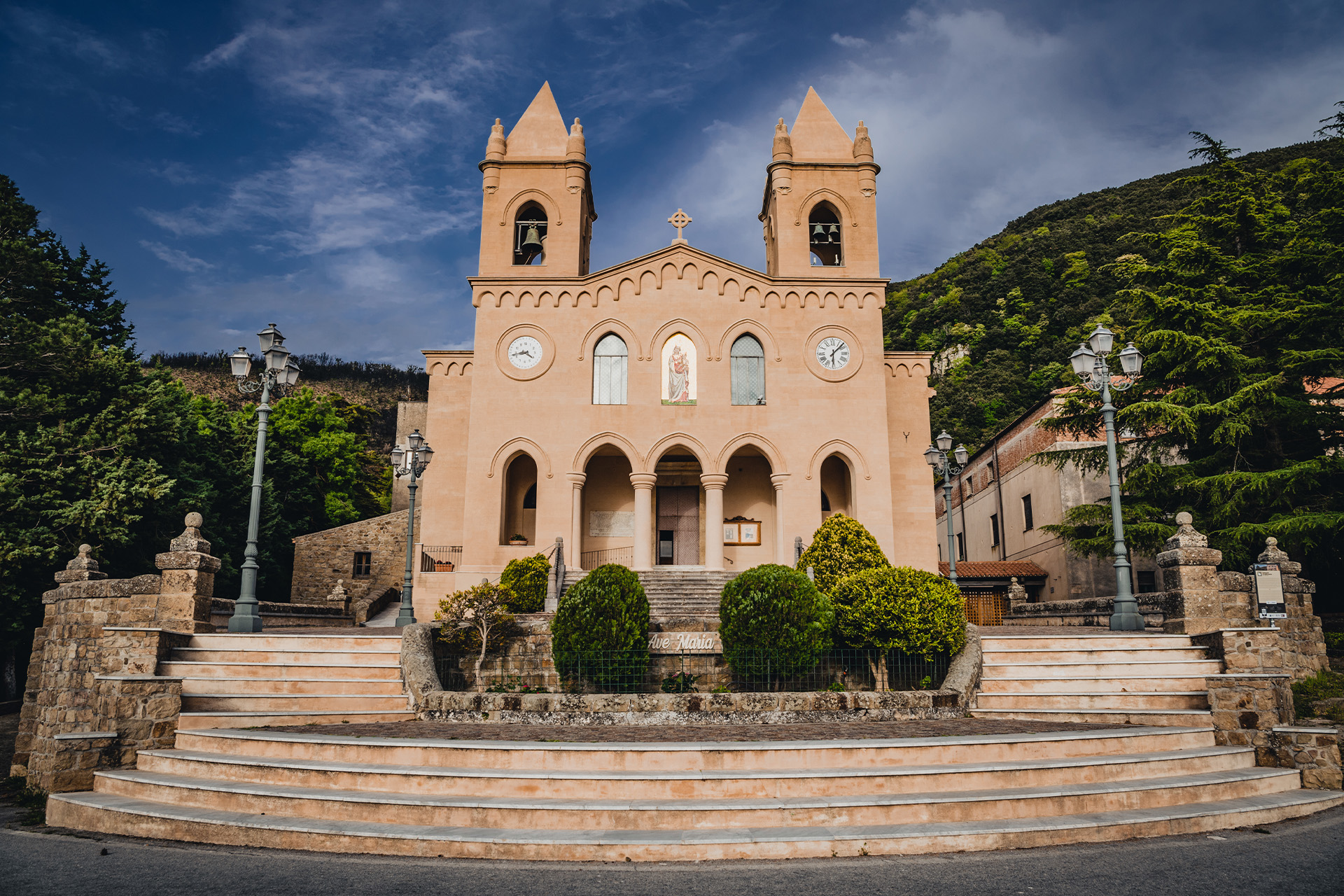
At 800 m above sea level, set in the woods, it houses the marble effigy of the Madonna and Child attributed to Antonello Gagini. According to tradition, it was founded in the 6th century by Pope Gregory the Great. It is 15 km from Cefalù.
Serra Guarneri
A wood of holm oaks and centuries-old oaks, a strict nature reserve. It offers panoramic views of the Rocca, the Aeolian Islands and the Madonie. 3 km from the SS 113.
Sant’Ambrogio
A hamlet 6 km to the east, with interwoven houses and streets, born as a farming village between the 17th and 18th centuries. Its patron saint’s festival of Maria SS. della Salute is a local highlight.
Outdoor Activities
Trekking, birdwatching, snowshoeing, horse riding and quad biking on the historic trails, Adventure Park, the Madonie Zipline (the only one in Italy at 1,000 m altitude) and paragliding.
Gal Hassin Astronomical Park in Isnello
Italy’s highest astronomical observatory and an educational hub with a museum, planetarium and observation terrace. It is 20 km away and can be visited by reservation.
We use cookies
We use technical cookies necessary for the site to function and, with your consent, analytics and marketing cookies. You can accept all cookies, reject them, or customize your preferences.
Cookies essential for the website to function. They cannot be disabled.
Help us understand how visitors use the site (e.g. Google Analytics).
Used to show relevant advertising and third-party content (e.g. YouTube, Facebook).
Remember your preferences to personalize your experience on the site.