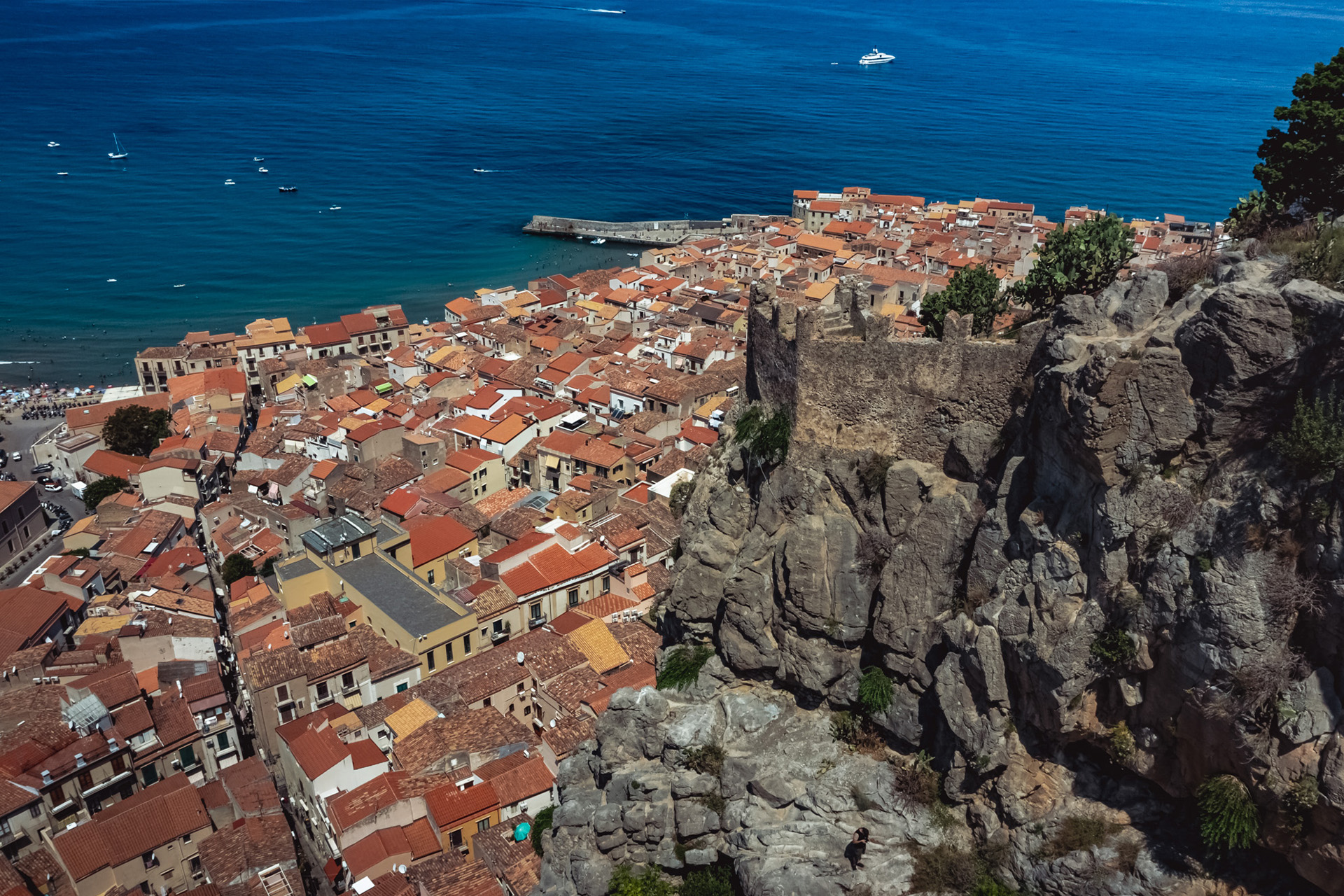
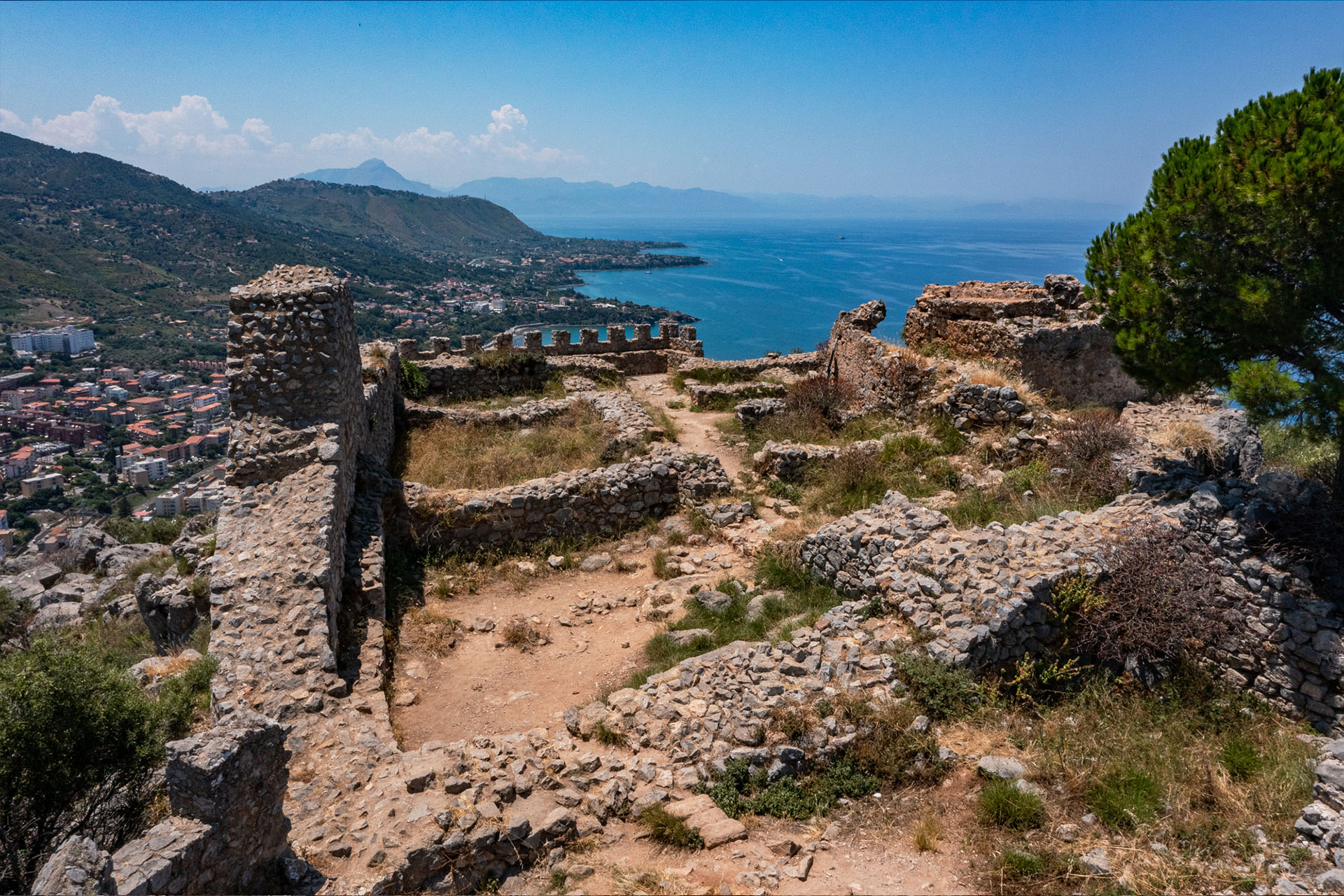
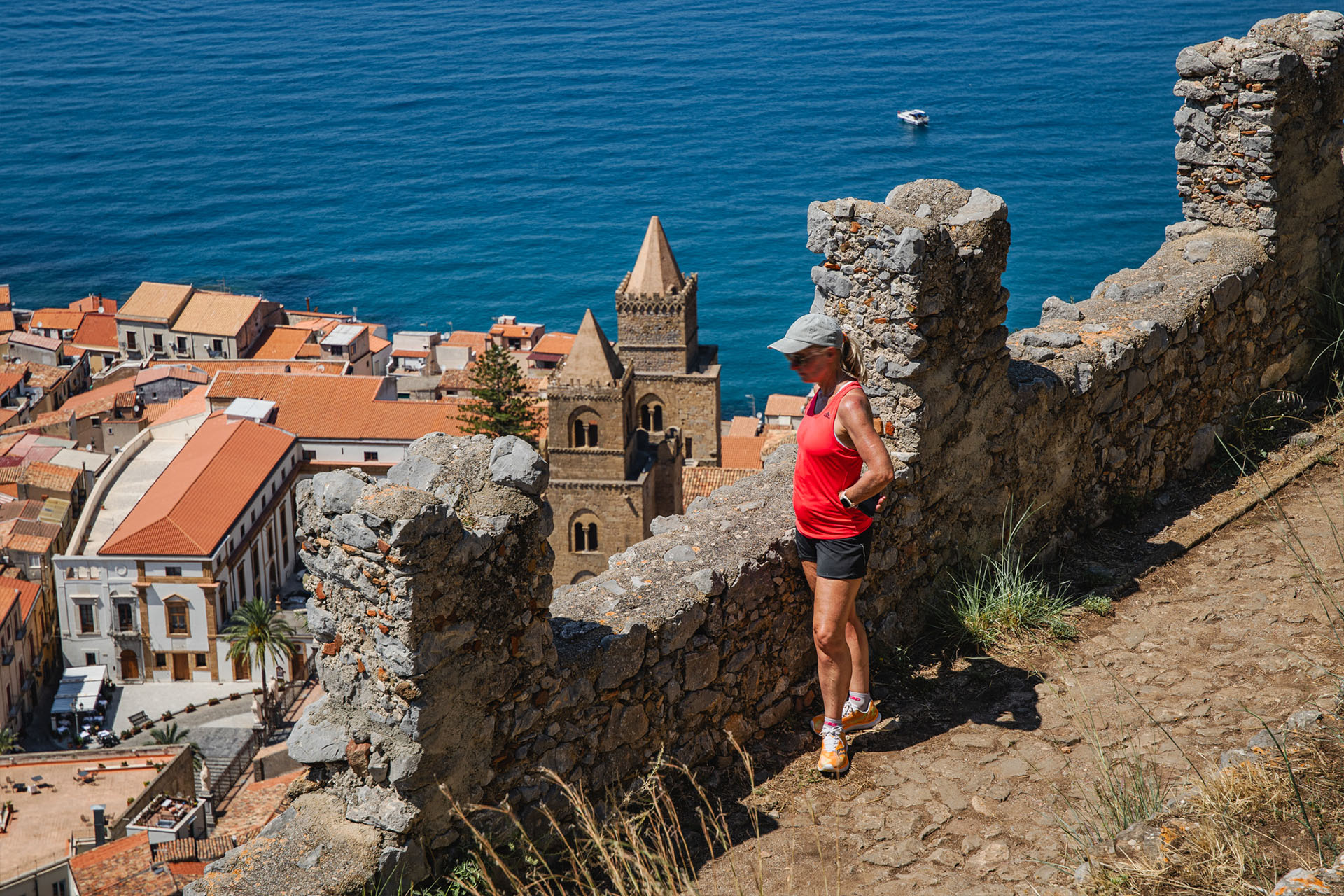
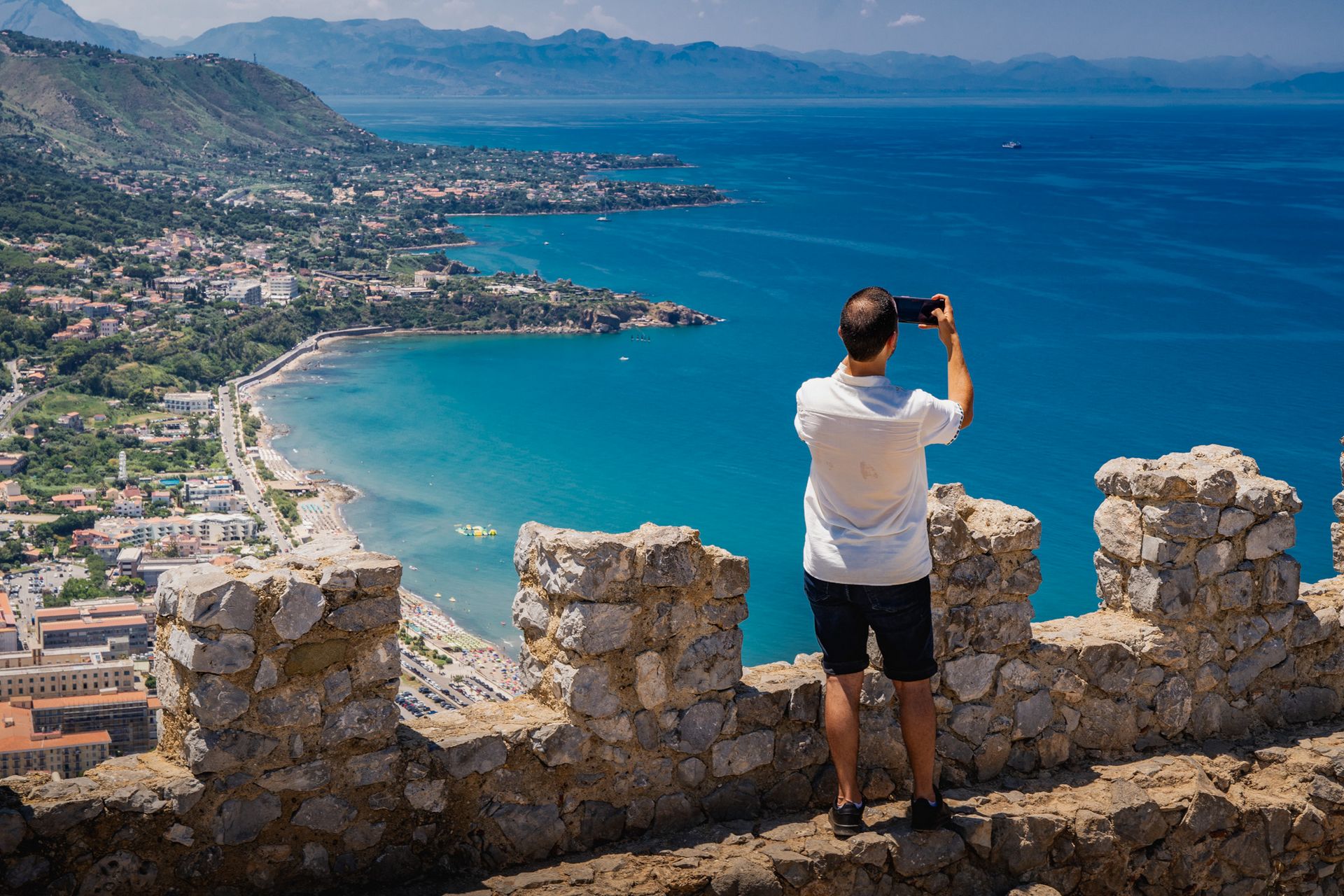
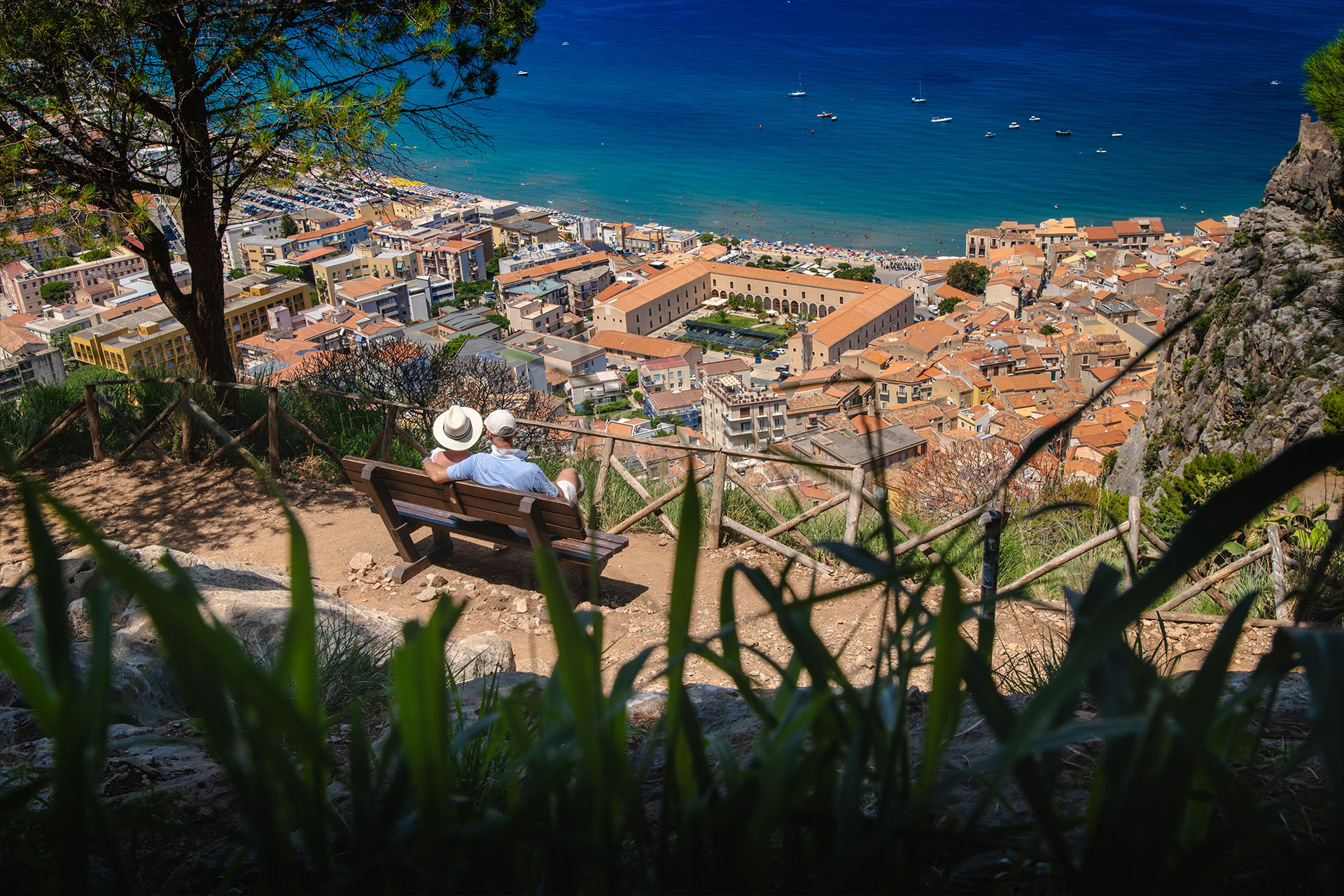
The Rocca of Cefalù watches over the town from a privileged vantage point and offers visitors one of the most enchanting views you will ever see, especially if you reach the top as the sun goes down. Stretching in a wide sweep from Palermo to Capo D’Orlando, the panorama makes this a must-see stop for romantics, enriched by the charm of the Greek myth of Daphnis tied to its origins.
If there is one place in Cefalù that unites lovers of history, culture, nature and landscape, it is undoubtedly the Rocca. The spectacular 268-metre cliff rising behind the town is an essential stop for anyone visiting Cefalù who wants to immerse themselves in the place where it all began.
According to some historians, it is this very rock that gave the town its name; in antiquity it was called Kephaloidion. The word comes from kefalis (Greek for “head”) and refers both to the shape of the cliff and to its position.
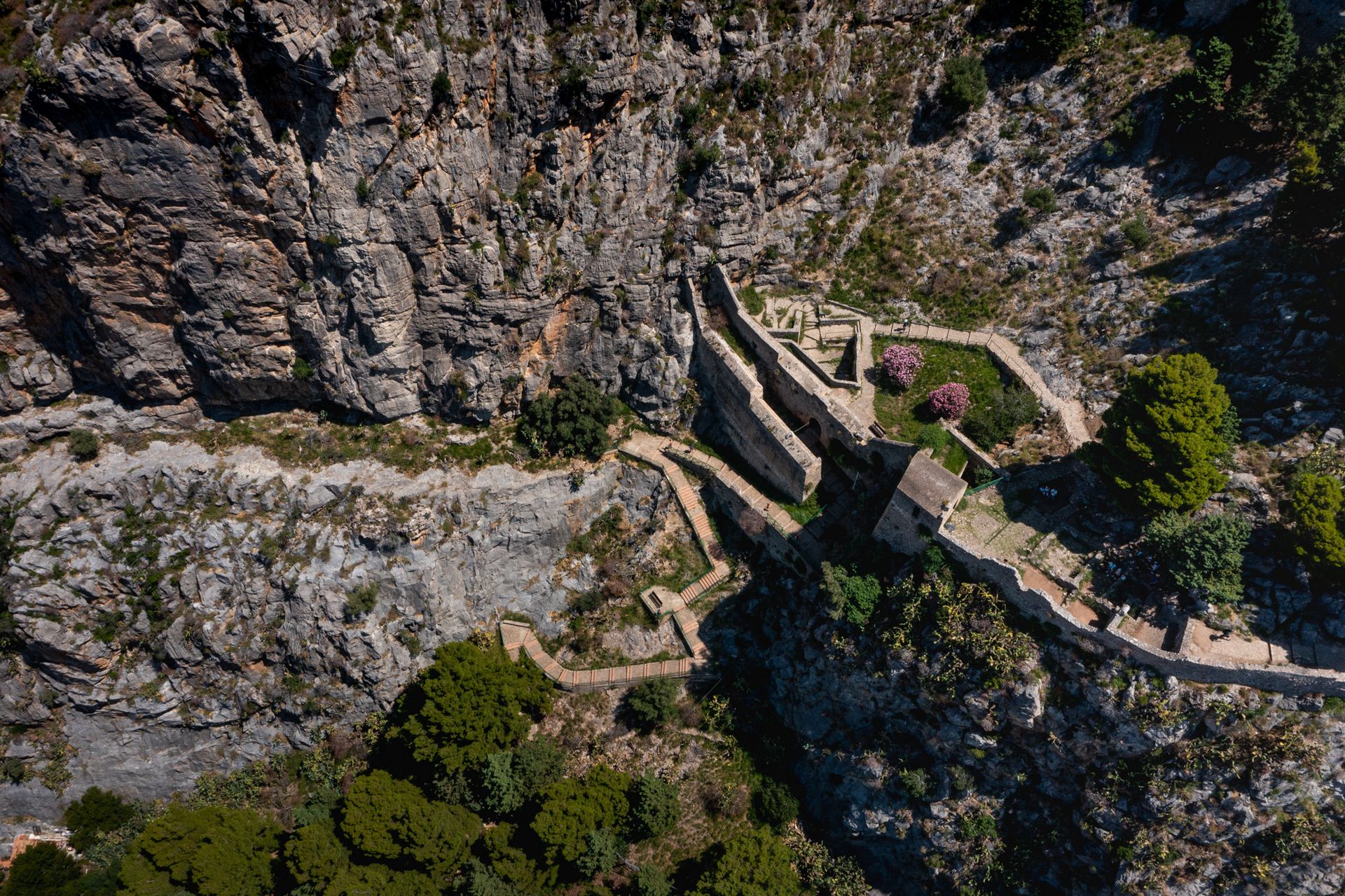
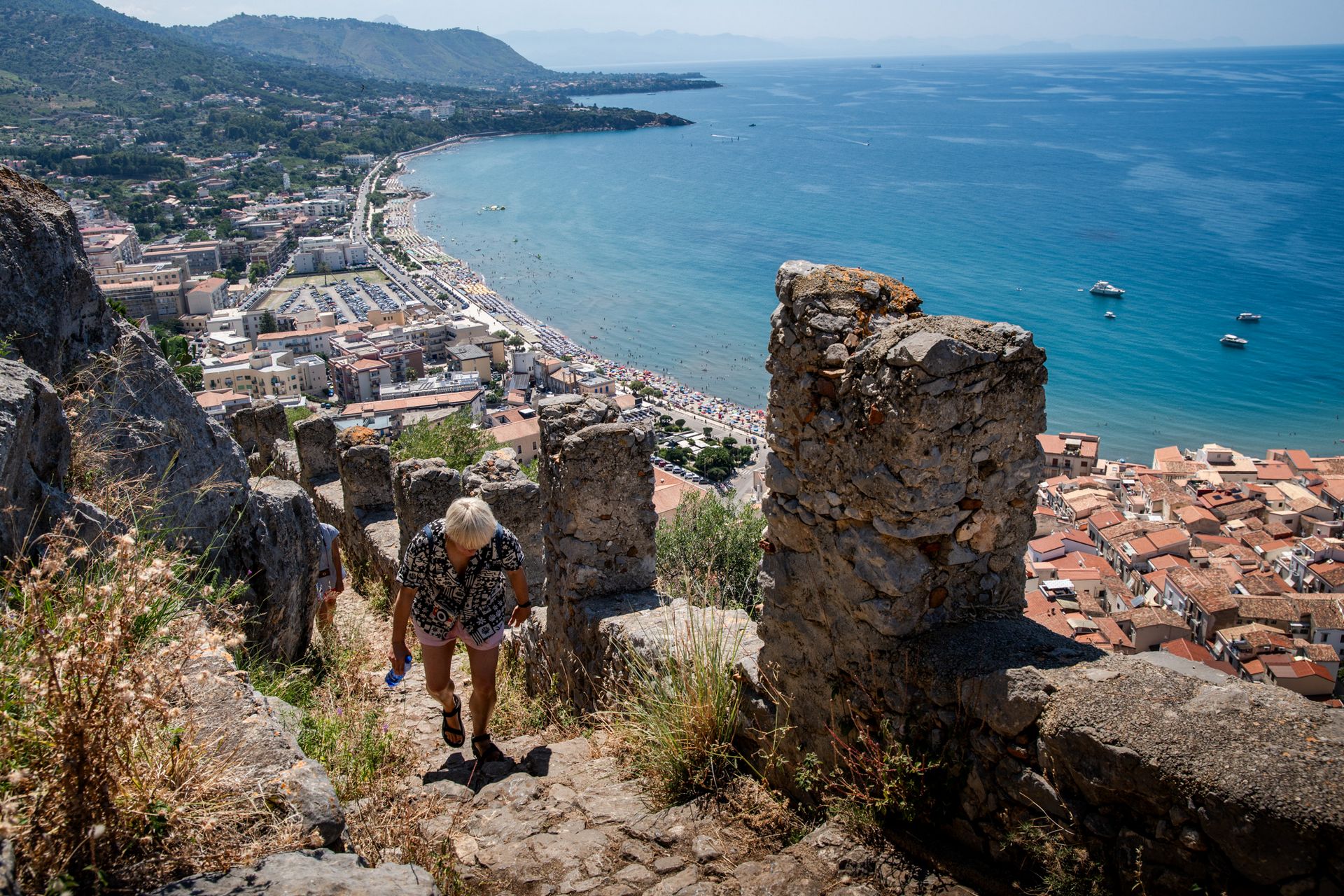
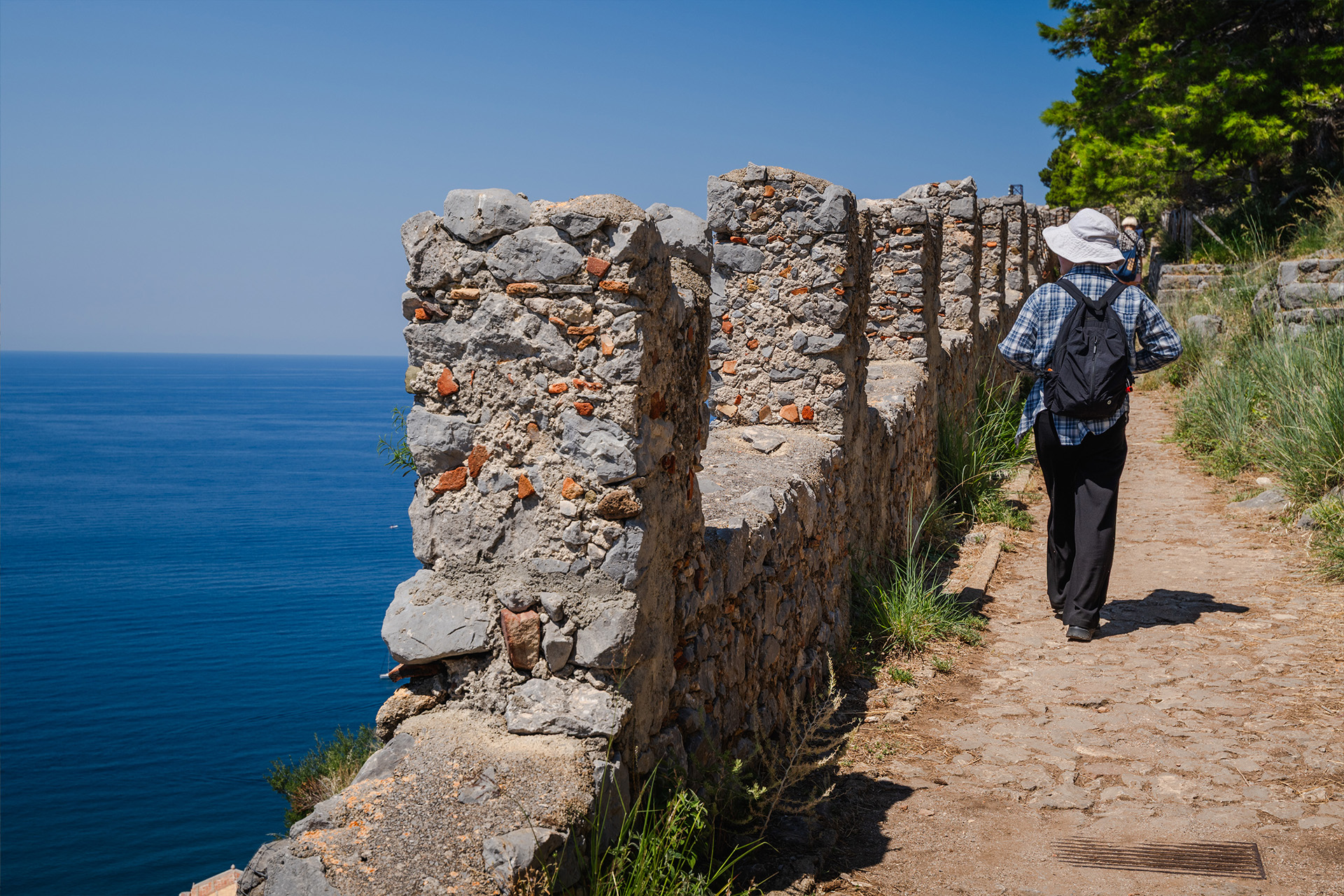
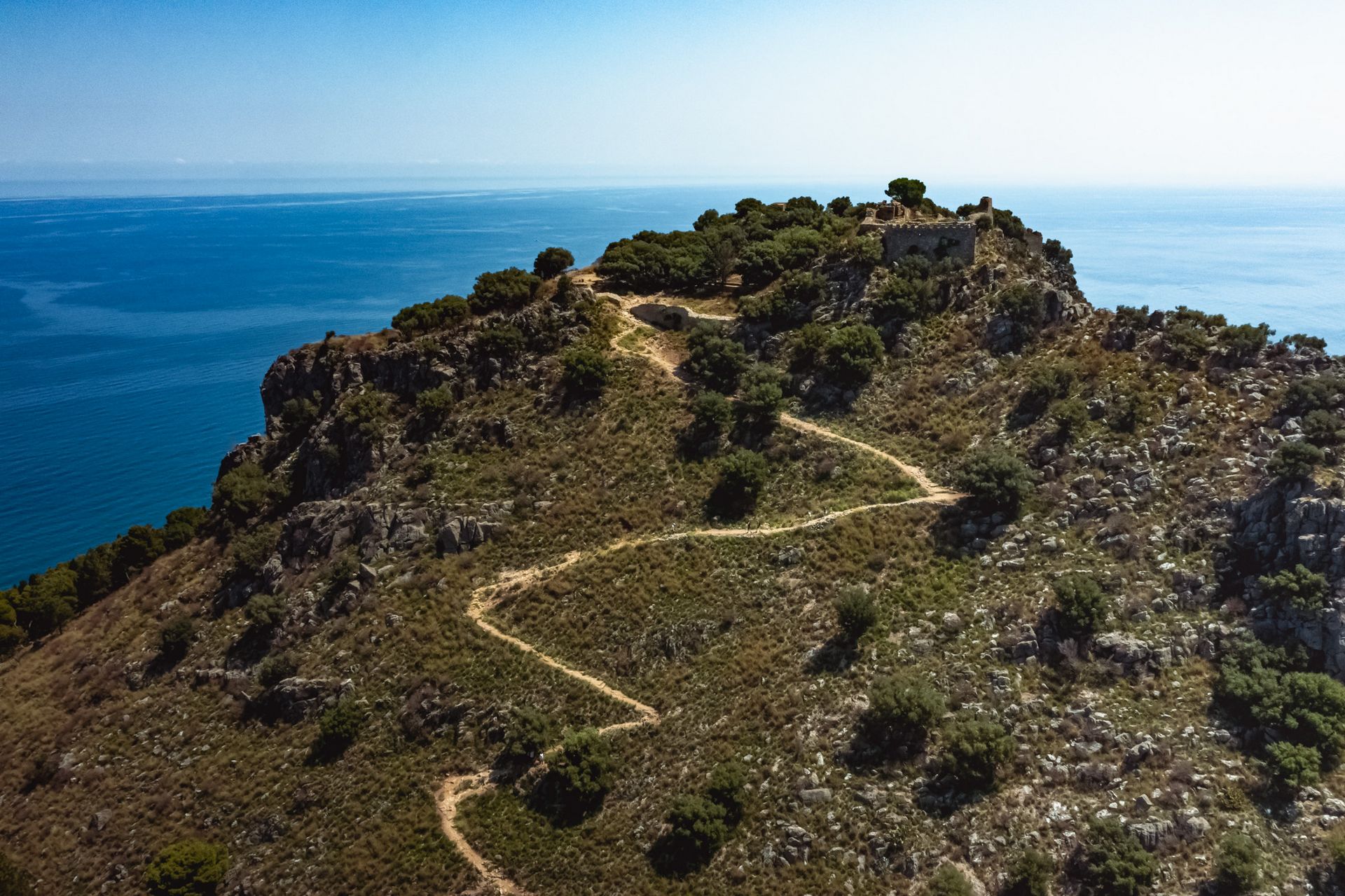
A steep path winding through greenery, fenced halfway up by tall crenellated walls dating from the medieval period, leads to the highest point of the Rocca di Cefalù, where you can admire the whole town and a breathtaking panorama that reaches from Palermo to Capo D’Orlando.
The limestone rock, dotted with fissures and caves open to the public, is a natural habitat for many species of local flora and fauna. Conifers and eucalyptus stand out among the Mediterranean scrub, while gulls, birds of prey and other birds share the Rocca with small rodents, hedgehogs and endemic insects.
The Rocca of Cefalù and the Greek myth of Daphnis
It is not only the scenery and nature: the story behind the Rocca also wins over the most romantic souls. Its formation is linked to the Greek myth of Daphnis, a demigod shepherd considered the inventor of pastoral song.
According to the legend, the beautiful Daphnis, at whose feet all the maidens fell, fell in love with the nymph Echemeide, daughter of Juno, and married her, swearing fidelity. The promise was broken, however, when Queen Clifene lost her head over Daphnis and, during a feast, stupefied him with a powerful aphrodisiac, leading him to betray his wife.
Blinded by rage, Echemeide’s mother punished him by making him blind and condemning him to despair. After wandering through the Sicilian countryside singing sad songs, Daphnis decided to take his own life by throwing himself off a precipice. Moved to pity, his father Hermes transformed him into the spectacular cliff, so that his soul would live on forever, set into the rock.
Info and prices
A ticket to climb the Rocca di Cefalù costs 5 euros, but reduced rates are available: 2.50 euros for children aged 6 to 14, adults over 65 and teachers.
The path up the Rocca di Cefalù is open every day all year round; opening hours may vary between the summer and winter periods.
From 30 March
8:00 am to 7:00 pm
last entry at 5:00 pm
Summer period (from the start of daylight saving time)
8:00 am to 8:00 pm
last entry at 6:00 pm
From mid-September
8:00 am to 7:00 pm
last entry at 5:00 pm
Winter period (from the end of daylight saving time)
8:00 am to 5:00 pm
last entry at 3:00 pm
Strictly prohibited
- Entry for anyone wearing open footwear (sandals, flip-flops, etc.) or smooth-soled shoes.
- Entry for unaccompanied minors.
- Lighting fires, bivouacking and camping.
- Damaging, moving, removing, hiding or defacing signage and any other structure.
- Climbing on monuments and the perimeter walls, or leaning out over the viewpoints.
- Leaving litter, even if biodegradable.
Mandatory
- Wear suitable clothing and footwear.
- Respect the prohibitions shown on the signs.
- Follow only the paths shown on the map and avoid rough terrain.
- Be careful and choose routes whose difficulty matches your abilities.
- In general, behave prudently and responsibly.
Recommended
- Find out about the difficulty of the different paths.
- In the summer months, avoid the hottest, sunniest hours and always wear a hat.
- In the winter months, dress warmly and, if necessary, bring waterproof clothing.
- Wear sportswear and trekking shoes.
- Carry a mobile phone.
- Bring a small supply of water.